
If your partner needs emotional connection before they feel sexual desire, the most important thing to know is this: it is not automatically a sign that they are no longer attracted to you, that your relationship is broken, or that you are fundamentally incompatible.
New to Whyzper? Discover how our app helps couples deepen their connection. Learn more about Whyzper!
For many people, desire does not lead connection. Connection leads desire. They feel open, receptive, and interested in intimacy after they feel emotionally safe, close, understood, or relaxed with their partner. When couples do not understand this pattern, they often turn a difference in desire style into a story about rejection, pressure, or personal failure.
What it means when your partner needs emotional connection first
That story usually makes things worse. The more one partner feels hurt and pursues reassurance through sex, and the more the other feels pressured and misunderstood, the more desire tends to shut down. The good news is that this is a relationship dynamic, not a character flaw. And dynamics can change.
Needing emotional intimacy before sexual intimacy does not mean someone is “too sensitive,” “withholding,” or “making excuses.” It often means their desire is more responsive than spontaneous.
In simple terms, some people feel desire out of the blue. Others access desire after the conditions feel right. Those conditions may include warmth, trust, affection, reduced tension, feeling wanted in a non-demanding way, or a sense that the relationship is emotionally steady.
This is why a partner can love you deeply and still struggle to feel sexually open after a day full of stress, distance, resentment, or emotional disconnection. It is not necessarily about low libido in a global sense. It may be about how their body and mind organize desire.
Why emotional intimacy affects sexual desire
A useful way to say it is: for some people, closeness is not the reward after intimacy. It is the pathway into intimacy.
Sexual desire is not just physical. It is relational, emotional, contextual, and highly sensitive to stress. In long-term relationships especially, desire often responds to the quality of connection between partners.
Emotional intimacy can affect desire because it helps create the internal conditions where attraction feels accessible rather than blocked. When someone feels criticized, unseen, rushed, or emotionally alone, their nervous system may not interpret intimacy as inviting. It may interpret it as one more demand.
Common reasons connection influences desire
- Stress narrows capacity: When someone is overwhelmed, emotional closeness can help them settle enough to feel present.
- Safety supports openness: Feeling emotionally secure often makes vulnerability easier.
- Resentment dampens desire: Unspoken hurt or recurring friction can quietly reduce sexual interest.
- Pressure shuts things down: If intimacy feels tied to obligation, many people pull away rather than move closer.
- Being understood is activating: Feeling emotionally met can increase warmth, affection, and receptivity.
On the other hand, when they feel connected, emotionally safe, and respected, desire has more room to emerge.
Why you should try not to take it personally
This does not mean emotional connection must be perfect before intimacy can happen. It means that for some partners, emotional climate matters more than the other person realizes.
This is often the hardest part. If you are the partner who feels ready for intimacy sooner, it can genuinely hurt when your partner says they need more connection first. It can sound like, “You are not enough,” or, “I do not want you.”
But in many relationships, that is not what is being communicated at all.
Very often, the deeper message is: “I want to feel close enough to access that part of myself.” Or: “I do not want intimacy to happen from pressure or disconnection.” Or even: “I miss us, and I need help finding my way back.”
- One partner feels rejected and becomes more urgent, hurt, or watchful.
- The other partner feels blamed, guilty, or pressured.
- Emotional connection drops further.
- Desire becomes even harder to access.
Taking it personally is understandable. But it can create a painful loop:
What this does not mean
When couples shift from “What is wrong with us?” to “What pattern are we stuck in?” they usually feel less defensive and more hopeful.
Myth: If they wanted you, they would not need emotional connection first
To keep the conversation grounded, it helps to name a few myths.
Myth: Emotional intimacy is just a stalling tactic
Reality: Wanting connection first may simply be how desire works for them.
Myth: This means you are sexually incompatible
Reality: For many people, emotional closeness is not avoidance. It is a real prerequisite for feeling open.
Myth: The solution is to stop needing sex or to force more of it
Reality: Different desire patterns are common in long-term relationships. They can create strain, but they do not automatically equal incompatibility.
How to respond without blame, pressure, or panic
Reality: Neither self-erasure nor pressure creates sustainable intimacy. The goal is to understand each other better and build a bridge that respects both partners.
1. Separate your hurt from your assumptions
If your partner needs emotional connection before sex, the healthiest response is not to over-pursue, shut down, or keep score. It is to get curious about what creates closeness for them and what makes intimacy feel emotionally expensive.
You may feel disappointed, lonely, or undesired. Those feelings matter. But try not to immediately turn them into conclusions like “They never want me” or “This relationship is doomed.” Feelings are real; interpretations are not always accurate.
2. Ask what connection actually means to them
A steadier approach sounds like: “This hurts, and I want to understand what helps you feel closer.”
“Emotional connection” can be vague. For one person it means a calm conversation. For another it means affection without an agenda. For someone else it means repair after conflict, shared laughter, quality time, or feeling supported in daily life.
- “What helps you feel emotionally close to me lately?”
- “What makes intimacy feel easier for you?”
- “What tends to shut you down, even unintentionally?”
Try questions like:
3. Reduce pressure disguised as closeness
The goal is not interrogation. It is clarity.
Many couples accidentally make every affectionate moment feel loaded. A hug becomes a test. A kiss becomes a negotiation. A quiet evening becomes an expectation.
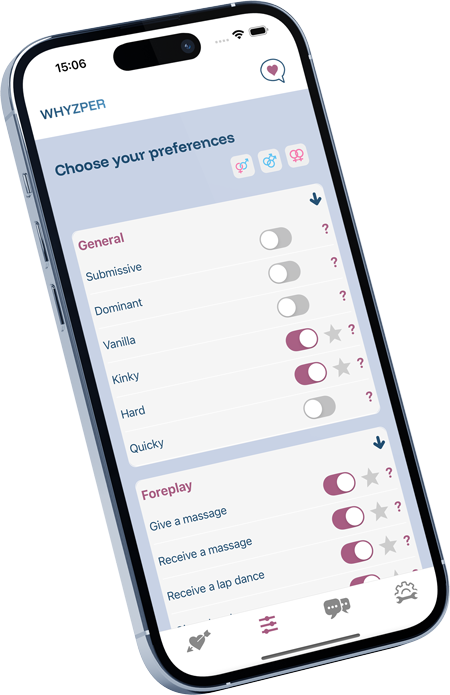
Ready to explore your desires together?
Whyzper lets you share your sexual desires playfully and without pressure – privately and only when both partners agree.
Download Whyzper for free4. Repair the small ruptures
When that happens, the partner who needs connection first may start avoiding even small moments of affection because they fear where it will lead.
Counterintuitively, one of the best ways to rebuild desire is to create more non-pressured closeness: touch, warmth, attention, humor, appreciation, and emotional presence that do not immediately demand a sexual outcome.
Sexual desire is often shaped by what happens outside the bedroom. Ongoing sarcasm, unresolved conflict, emotional neglect, chronic criticism, or feeling invisible in daily life can quietly erode openness.
5. Stop treating one desire style as more valid
If your partner says they need connection, look beyond the moment itself. Ask whether there are unresolved hurts, recurring misunderstandings, or everyday patterns of distance that need attention.
Sometimes the issue is not grand drama. It is accumulated disconnection.
In many couples, one partner values spontaneity and the other values emotional warm-up. Neither is wrong. Problems start when one style becomes the gold standard and the other gets framed as defective.
How to create more desire together
A mature relationship makes room for both realities: the longing to feel wanted and the need to feel emotionally connected.
Build emotional intimacy in smaller, steadier ways
That is where collaboration begins.
Creating more desire together is usually less about finding a perfect technique and more about changing the relational atmosphere. Desire grows better in spaces that feel safe, playful, and emotionally attuned than in spaces filled with pressure, resentment, or fear of rejection.
- Short check-ins that go beyond logistics
- Moments of appreciation and verbal warmth
- Gentle affection without an agenda
- Repair after conflict instead of silent distance
- Shared rituals that make you feel like a team
Do not wait until one of you wants sex to talk, connect, or repair. That makes emotional connection feel transactional.
Make it safer to be honest about desire
Instead, invest in closeness regularly through:
Small moments count. In long-term relationships, desire often responds to cumulative emotional tone, not dramatic gestures.
- “I miss feeling close to you, and I want us to find a way back together.”
- “I want affection from you, but I do not want you to feel pressured.”
- “I notice I open up more when we have had time to reconnect emotionally.”
Many couples get stuck because both people are protecting themselves. One partner hides their longing to avoid seeming needy. The other hides their hesitation to avoid hurting feelings. The result is politeness on the surface and loneliness underneath.
Use support tools that lower awkwardness
Honesty works better when it is kind and specific. For example:
This kind of language reduces blame and increases teamwork.
If you are the partner who needs connection first
Some couples know what they feel but struggle to say it clearly in the moment. That is where a discreet, emotionally intelligent tool can help. Whyzper is designed as a private relationship companion for intimacy, desire, and connection without pressure or awkwardness. It can help couples express preferences, open softer conversations, and create more emotional clarity without making intimacy feel clinical or forced.
The key is not replacing real connection. It is making connection easier to start.
- “This is not about me not wanting you.”
- “Connection helps me access desire; it is not a test you have to pass.”
- “I want us to find ways of feeling closer that work for both of us.”
If this article sounds like you, your needs matter too. But your partner may still experience your pattern as distance or rejection, especially if they do not understand it.
When this pattern becomes a recurring relationship issue
It can help to reassure them directly:
Try to be concrete about what helps. “I need emotional connection” is true, but broad. “I feel more open when we have had a calm evening, some affection, and no unresolved tension” gives your partner something clearer to understand.
- When do we feel most emotionally close?
- What tends to create pressure between us?
- What daily habits build connection, and which ones erode it?
- How do we talk about desire without blame or defensiveness?
If this dynamic keeps creating pain, it may help to treat it as an ongoing relationship conversation rather than a series of disappointing moments.
FAQ: emotional connection and sexual desire
Is it normal to need emotional connection before sex?
You might look at questions like:
Does needing emotional intimacy first mean low libido?
For some couples, these conversations are enough to shift the pattern. For others, outside support such as couples therapy can help create a calmer, more structured space to understand relationship dynamics. That is not a sign of failure. It is often a sign that both people care enough to stop repeating the same painful loop.
What if I feel rejected when my partner says they need connection first?
Yes. Many people experience desire more easily when they feel emotionally close, safe, and connected. This is a common relationship pattern, especially in long-term relationships.
Can couples work through this difference?
Not necessarily. It may reflect how desire gets activated rather than how much desire a person has overall. Context, stress, and relationship quality can strongly affect access to desire.
The bottom line
Your hurt is real, but it helps to separate pain from interpretation. Their need for connection may not be a rejection of you. It may be information about what helps intimacy feel possible for them.
Yes. Many couples improve this dynamic by reducing pressure, building emotional closeness in everyday life, talking more clearly about desire, and treating the issue as a shared pattern rather than a personal defect.
If your partner needs emotional connection first, try not to hear it as a verdict on your attractiveness or your relationship. More often, it is a map. It tells you something important about how desire works for them.