
Some of the strongest relationships are not built on grand gestures. They are built on small, repeated moments that quietly say: this is us.
New to Whyzper? Discover how our app helps couples deepen their connection. Learn more about Whyzper!
That is the case for private couple culture. It is the shared world two people create through rituals, inside language, tiny traditions, familiar glances, and meaningful habits. Far from being trivial, these micro-patterns can strengthen emotional intimacy, increase resilience in long-term relationships, and create a grounded sense of being on the same team.
The key is balance. Healthy private couple culture helps partners feel special, secure, and connected without becoming isolated, secretive in harmful ways, or emotionally fused. Done well, it creates closeness and individuality at the same time.
What is private couple culture?
In practical terms, that means this: if you want to feel closer as a couple, do not only focus on “better communication” in the abstract. Build more shared meaning. Create repeatable moments of belonging. Develop your own language of connection.
Private couple culture is the unique emotional ecosystem that develops between two partners over time. It includes the little things that may look ordinary from the outside but carry special meaning inside the relationship.
- Shared rituals, like a Sunday morning walk or a nightly check-in
- Inside jokes and phrases only the two of you understand
- Small affectionate habits, like a certain way of greeting each other
- Personal traditions around stress, celebration, travel, or repair after conflict
- Symbols of team identity, such as “our song,” “our spot,” or recurring routines
This can include:
In short, private couple culture is not about performing romance for other people. It is about building a sense of “us” that feels lived-in, safe, and emotionally real.
Why shared rituals and inside language matter so much
One simple way to define it is this: private couple culture is the shared meaning system that helps a relationship feel like home.
Many people think closeness comes mainly from intense conversations, conflict resolution, or sexual intimacy. Those things matter, of course. But long-term connection is also shaped by smaller, steadier forms of emotional bonding.
1. They create emotional safety
Shared rituals and inside language matter because they create three powerful experiences at once: predictability, playfulness, and belonging.
Rituals are regulating. A familiar goodbye kiss, a Friday night debrief, or a “how are we doing?” moment at the end of the week gives the nervous system something steady to trust. In a busy world, repeated connection points reduce relational drift.
2. They create a team identity
When couples know they have these touchstones, the relationship often feels less fragile. You do not have to wonder every day whether connection will happen. It already has a place.
Healthy couples usually do not just feel attraction. They feel alliance. They experience themselves as two distinct people who also share a meaningful bond.
3. They keep intimacy alive in ordinary life
Private language and rituals reinforce that team feeling. They say, “We know each other. We have history. We have ways of finding one another.” This matters in everyday life, but especially during stress, life transitions, parenting pressure, work overload, jealousy, or moments of emotional distance.
Intimacy is not only built in milestone moments. It grows in repeated, embodied, emotionally intelligent interactions. A look across the room. A phrase that softens tension. A ritual that helps you reconnect after a hard day.
This is especially important in long-term relationships, where closeness can fade not because love is gone, but because shared meaning gets crowded out by logistics.
Private couple culture is not the same as codependence
Couples do not only need time together. They need recognizable ways of being together.
This distinction matters. A strong “us” is healthy. Losing yourselves inside the relationship is not.
Healthy private couple culture looks like:
- Shared rituals that both people enjoy
- Inside jokes that feel inclusive and affectionate, not humiliating
- A sense of “we” that coexists with individual identity
- Private meaning that strengthens trust and ease
- Mutual participation rather than one person setting all the rules
Unhealthy versions may look like:
- Using “our bond” to avoid outside support or perspective
- Demanding loyalty tests or emotional exclusivity
- Turning private language into passive-aggression or control
- Mocking others to feel closer as a couple
- Expecting one partner to give up autonomy in the name of closeness
Private couple culture becomes helpful when it supports connection, not control. It should make both people feel freer, warmer, and more known. It should not require constant exclusivity, emotional enmeshment, or withdrawal from friends, family, and the wider world.
What makes small rituals so powerful in relationships?
The goal is not a sealed bubble. The goal is a resilient bond.
Small rituals work because they do more than create routine. They create meaning. A ritual says, “This moment matters enough to repeat.” That repetition becomes emotional architecture.
- Reconnect after conflict
- Reduce the impact of stress and distraction
- Strengthen emotional intimacy without pressure
- Maintain closeness during demanding seasons
- Create continuity through change
Over time, rituals can help couples:
For example, a two-minute bedtime ritual may not sound impressive. But if it consistently communicates affection, attention, and emotional availability, it can have more long-term value than occasional dramatic attempts to “fix” the relationship.
Examples of private couple culture that actually strengthen connection
That is one reason relationship improvement often starts with smaller patterns, not bigger promises.
Micro-rituals of reunion
The best rituals are usually simple enough to sustain. They should feel natural, not performative. Here are a few forms that often support closeness in real life.
- A no-phone hello for the first minute after coming home
- A hug that lasts long enough to actually land
- A familiar question like, “What was the hardest part of your day?”
How you reconnect after time apart matters. This might be:
Private language
These rituals create a transition from separate worlds back into shared space.
Inside phrases, nicknames, recurring references, and little codes can create warmth and immediacy. They remind each partner: there is history here. There is shared memory. There is texture.
Repair rituals
Private language can be especially useful during tense moments. A gentle phrase that both people recognize may interrupt defensiveness faster than a long explanation.
Every couple experiences friction. What often matters most is whether they have a reliable way back.
- A phrase that signals, “I want to reset”
- A walk after conflict instead of continuing in circles
- A short check-in once emotions have settled
- A habit of naming one thing you each understood better afterward
A repair ritual could be:
Rituals of appreciation
Repair does not need to be perfect to be meaningful. It needs to be repeatable.
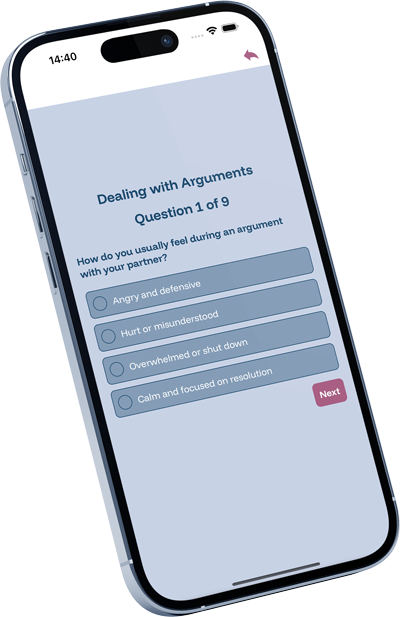
Ready for deeper conversations?
The DeepTalk feature in Whyzper guides you through meaningful questions to help strengthen your emotional connection.
Download Whyzper for free- Sending one small grateful text during the day
- Naming one thing you admired that week
- A tiny celebration ritual after hard tasks or personal wins
Long-term closeness often weakens when appreciation becomes assumed rather than expressed. A private culture of noticing can change that.
Playful “us” traditions
Examples include:
These moments help partners feel seen rather than merely managed.
- A silly phrase before trips
- A rating system for coffee shops or hotel pillows
- A made-up tradition for rainy days
- A recurring game during errands or commutes
Not every ritual has to be serious. In fact, play is part of what protects connection from becoming purely functional.
Why private couple culture helps during hard seasons
This might include:
Playfulness is not a luxury. It is often a quiet form of emotional intimacy.
Stress changes relationship dynamics. When people are overwhelmed, they often become more reactive, more task-focused, and less emotionally available. That is exactly when private couple culture becomes most valuable.
- Work stress and burnout
- Parenting overload
- Long-distance periods or travel
- Relationship healing after disconnection
- Libido differences or changing intimacy rhythms
- Life transitions, grief, or uncertainty
During difficult seasons, shared rituals can act like small anchors. They do not remove the stressor, but they reduce the feeling that the relationship is disappearing inside it.
This is relevant for couples dealing with:
How to build a stronger “us” without becoming isolated
When everything feels unstable, even one or two dependable rituals can preserve a sense of connection. They become evidence that the relationship is still active, still cared for, still worth returning to.
1. Start with what already feels natural
That is one reason couples therapy and relationship communication advice often emphasize not just what partners say, but what they repeatedly do.
If this idea resonates, the goal is not to invent a perfectly curated relationship culture overnight. It is to notice what already works and make it more intentional.
2. Choose rituals that reduce pressure, not add it
Ask yourselves: what do we already do that makes us feel like us?
3. Let both people shape the culture
Maybe it is a voice note habit, a Sunday reset, a certain kind of humor, or a small gesture before sleep. The strongest rituals are often already present in embryonic form.
4. Keep your outside world intact
Good rituals are easy to return to. If a habit feels like another obligation, it will not support intimacy for long. Aim for small, warm, sustainable actions.
5. Revisit what still fits
Private couple culture should be co-created. If one person defines all the rituals, meanings, and emotional expectations, the bond can start to feel managed instead of mutual.
A healthy couple identity exists alongside friendships, family ties, solo interests, and personal growth. Closeness becomes more resilient when both partners can bring full selves into the relationship.
Myth vs. reality: what closeness actually needs
Myth: Strong couples just “naturally” feel close
Couples change. Seasons change. A ritual that once felt connective may stop working. That is normal. The point is not to preserve every tradition forever. The point is to keep renewing shared meaning in ways that fit who you are now.
Myth: Rituals are boring or unromantic
Tools like Whyzper can support this gently by giving couples a discreet, emotionally intelligent space to explore connection, desire, and deeper conversation without making things feel heavy or awkward. Sometimes what strengthens a private culture is not one big talk, but a softer way of opening one.
Myth: A strong couple identity means doing everything together
Reality: Most lasting closeness is built through repeated behaviors, not permanent chemistry.
Myth: Only big conversations deepen a relationship
Reality: The right rituals make intimacy easier to access. They create continuity, anticipation, and emotional safety.
Signs your relationship could benefit from more private couple culture
Reality: Healthy interdependence includes both connection and separateness.
- Your relationship feels functional but flat
- You love each other but feel less playful than before
- You keep waiting for “quality time” that never quite happens
- You want more emotional intimacy without forcing heavy conversations
- You miss the feeling of being a team
Reality: Tiny moments of recognition often shape a bond just as much as major talks.
FAQ: private couple culture and relationship closeness
Is private couple culture healthy?
You do not need to be in crisis to need more intentional connection. This framework may help if:
What are examples of relationship rituals?
Often, the issue is not lack of love. It is lack of shared texture.
Can inside jokes and private language really strengthen a relationship?
Yes, when it supports mutual connection, trust, and individuality. It becomes unhealthy when it promotes control, isolation, or emotional fusion.
What if my partner is not naturally “ritual-oriented”?
Examples include a daily check-in, a special goodbye routine, a weekly walk, a repair phrase after conflict, or a shared appreciation habit.
The deeper point: every lasting relationship needs a language of “us”
Yes. Shared language reinforces belonging, playfulness, memory, and team identity. It can also soften tension and make connection feel more immediate.
Start small and practical. Focus on low-pressure habits that feel useful or warm rather than overly sentimental. The best rituals are the ones both people can genuinely enjoy.
Private couple culture is not fluff. It is one of the quiet ways love becomes durable.
When two people build shared rituals, private meaning, and a recognizable way of returning to each other, the relationship gains more than sweetness. It gains structure. It gains memory. It gains emotional resilience.
And perhaps most importantly, it creates a lived answer to a question many couples carry silently: How do we keep feeling close when life gets full, messy, or ordinary?