Quick Answer: Mismatched libido—when partners have different levels of sexual desire—affects 60-80% of couples at some point, according to the Journal of Sex Research (2022). It’s not a sign of incompatibility or lost attraction; it’s a normal variation that responds to stress, hormones, relationship dynamics, and life circumstances. The solution isn’t changing who you are or forcing desire—it’s creating safety, understanding responsive desire, addressing root causes, and removing pressure from initiation.
Key Takeaways:
- Mismatched libido is temporary and fixable in most relationships
- Responsive desire (desire that shows up during intimacy, not before) is completely normal
- Pressure and obligation make the problem worse, not better
- Technology can remove initiation anxiety while respecting both partners’ autonomy
- Small, consistent changes create lasting improvement within 6-8 weeks
It’s 11 PM on a Tuesday. You reach for your partner’s hand, letting your touch linger just a moment longer than usual. They glance at their phone, mumble something about being tired, and roll over. The silence that follows is heavier than any argument—full of unspoken hurt, guilt, and a question neither of you wants to ask out loud: Is something wrong with us?
If this scene feels painfully familiar, you’re far from alone. The gap between what you want and what your partner wants—in frequency, timing, or intensity—creates one of the most emotionally charged tensions in modern relationships. One partner feels rejected and undesirable. The other feels pressured and inadequate. Both wonder if this means the relationship is failing.
Here’s what almost no one tells you: this isn’t a problem you caused, and it’s not one you have to live with. Mismatched libido is one of the most common—and most solvable—challenges couples face.
New to Whyzper? Discover how our app helps couples deepen their connection. Learn more about Whyzper!
What Is Mismatched Libido?
Mismatched libido, also called desire discrepancy, occurs when partners have different baseline levels of sexual desire or different ideal frequencies for intimacy. One partner might naturally want physical connection several times a week, while the other feels satisfied with once or twice a month. Neither is wrong—they’re just different.
This manifests in several ways:
Frequency differences: One partner initiates regularly while the other rarely thinks about sex unprompted.
Timing misalignment: One person feels desire in the morning, the other late at night. By the time one partner is interested, the other is exhausted.
Stress responses: Some people crave physical connection when stressed (sex as stress relief), while others lose all interest when overwhelmed (stress as desire killer).
Spontaneous vs. responsive patterns: One partner experiences spontaneous desire—sudden, unprompted interest in sex. The other experiences responsive desire—interest that emerges during intimacy, not before it begins.
What Mismatched Libido Is NOT
Let’s be absolutely clear about what this doesn’t mean:
It’s not about attraction. Your partner can find you devastatingly attractive and still not experience frequent spontaneous desire. Desire and attraction operate on different systems.
It’s not a sign of incompatibility. Perfectly compatible couples often have different baseline desire levels. Compatibility is about how you navigate differences, not whether differences exist.
It’s not fixed or permanent. Desire fluctuates with stress, health, relationship dynamics, and life stages. What’s true today won’t necessarily be true in six months.
It’s not anyone’s fault. The higher-desire partner isn’t “too demanding.” The lower-desire partner isn’t “broken” or withholding. You’re both experiencing normal human variation.
| Mismatched Libido IS | Mismatched Libido is NOT |
|---|---|
| Normal variation in human sexuality | Sign of relationship failure |
| Temporary and responsive to change | Permanent, fixed state |
| About frequency and timing preferences | About attraction or love |
| Common across relationship lengths | Only a problem in struggling relationships |
| Solvable with communication and strategy | Someone’s fault or character flaw |
How Common Is This?
If you’re dealing with mismatched libido, you’re in the majority, not the minority.
Research consistently shows that 60-80% of couples experience significant desire discrepancy at some point in their relationship (Journal of Sex Research, 2022). The Kinsey Institute’s longitudinal studies reveal that sexual desire naturally varies across the lifespan—and rarely do two partners’ desire patterns align perfectly for years on end.
Dr. Esther Perel, renowned relationship therapist, notes that “the expectation of synchronized desire is one of the great myths of modern relationships.” We’ve been sold the idea that compatible couples naturally want sex at the same frequency, with the same intensity, at the same moments. This is fiction. Real couples have real variations.
The Gottman Institute’s research on long-term relationship satisfaction found something surprising: couples who report high satisfaction often don’t have perfectly matched desire. What they have instead is effective communication about their differences and strategies that respect both partners’ needs.
Here’s why it seems rare: nobody talks about it. Social media shows highlight reels. Friends share stories of great sex, not mismatched Monday nights. This silence creates the illusion that you’re alone in this struggle. You’re not. The couple who seems perfectly in sync at dinner parties? There’s a good chance they’re navigating the same challenge—they’ve just learned to handle it without drama.
Why Does It Happen?
Understanding why mismatched libido occurs in your relationship is the first step toward addressing it. The causes are rarely simple, and often multiple factors overlap.
Biological Factors
Hormones fluctuate constantly. Testosterone influences desire in all genders (not just men), and levels vary based on age, stress, sleep, and overall health. Estrogen and progesterone cycles affect desire throughout the menstrual cycle—some people experience heightened desire during ovulation, others during menstruation, and some notice no pattern at all.
Age changes everything. Desire typically peaks at different ages for different people. Some experience their highest desire in their 20s, others in their 40s or beyond. Menopause, andropause (the male equivalent), and natural aging all shift hormone levels and, consequently, desire patterns.
Medications have hidden effects. SSRIs (antidepressants) are notorious for reducing libido and making orgasm difficult. Hormonal birth control affects some people dramatically and others not at all. Blood pressure medications, allergy medications, and even some supplements can dampen desire. If your libido changed after starting a new medication, that’s likely not a coincidence.
Health conditions matter. Thyroid disorders, chronic pain, diabetes, cardiovascular issues, and dozens of other conditions directly impact sexual desire and function. Sometimes what looks like a relationship problem is actually a medical issue that needs attention.
Psychological Factors
Stress is the biggest libido killer for modern couples. When your body is flooded with cortisol (the stress hormone), it suppresses sex hormones. Your brain prioritizes survival over reproduction. For many people, stress from work, finances, or family obligations completely overrides sexual interest. For others, sex becomes a stress-relief mechanism—creating an unfortunate dynamic where one partner wants sex more during stressful periods while the other wants it less.
Mental health and desire are deeply connected. Depression commonly reduces interest in activities that once brought pleasure—including sex. Anxiety can manifest as performance pressure, making intimacy feel stressful rather than connective. Body image struggles make vulnerability feel unsafe. Past trauma—whether sexual or otherwise—creates complex associations that affect present-day desire.
Performance anxiety creates vicious cycles. Worry about satisfying your partner, taking too long, not staying aroused, or “failing” makes desire evaporate. Each anxious experience reinforces the pattern, making future intimacy feel like a test you might fail.
Relationship Factors
Emotional disconnection precedes physical disconnection. When you’re carrying resentment about household chores, feeling unheard about career stress, or still hurt from an argument three weeks ago, sexual desire doesn’t spontaneously appear. For many people (particularly those with responsive desire patterns), emotional intimacy must come before physical intimacy feels appealing.
The pursuer-distancer dynamic amplifies the problem. One partner pursues (initiates, hints, suggests) while the other distances (deflects, delays, avoids). The more one pursues, the more the other distances. The more one distances, the more desperate and hurt the pursuer feels. This dance becomes the relationship’s default pattern, making genuine connection increasingly difficult.
Unresolved conflicts poison intimacy. You can’t ignore tension all day and then expect sexual openness at night. Unaddressed issues create emotional walls that make vulnerability—which intimacy requires—feel unsafe.
Attachment styles play a significant role. Anxiously attached individuals may seek physical intimacy as reassurance, while avoidantly attached partners may withdraw from intimacy when feeling overwhelmed. Understanding your attachment patterns helps you recognize these dynamics rather than taking them personally.
Lifestyle Factors
Exhaustion is epidemic. When you’re running on six hours of sleep, managing work deadlines, and collapsing into bed each night depleted, sexual desire isn’t high on your body’s priority list. Fatigue affects the higher-desire partner too—even if they still want sex, exhaustion reduces their ability to create context conducive to intimacy.
Parenting fundamentally changes desire patterns. Small children interrupt sleep, create constant physical demands (“touched out” is real), and generate mental load that leaves little cognitive space for desire. The partner who spends all day meeting others’ needs often has nothing left to give by bedtime.
Living situations affect intimacy. Thin walls, roommates, visiting family—when privacy isn’t guaranteed, spontaneous intimacy becomes stressful rather than appealing.
Screen time before bed kills arousal. Blue light suppresses melatonin (making quality sleep harder), and scrolling through anxiety-inducing news or social comparison doesn’t create the mental space where desire flourishes.
Substances affect desire in complex ways. Alcohol might lower inhibitions initially, but regular use dampens desire and sexual function. Cannabis affects people differently—some find it enhances sensation and presence, others experience reduced motivation for all activities, including sex.
The truth is, most couples dealing with mismatched libido aren’t facing one cause—they’re navigating three or four simultaneously. The good news? Addressing even one or two factors can create meaningful improvement.
The Emotional Impact
Before we dive into solutions, let’s acknowledge what this actually feels like. Both partners are hurting, just in different ways.
For the Higher-Desire Partner
Every initiation attempt feels like putting your heart on the line. When your partner says no, declines nonverbally, or responds with visible reluctance, it doesn’t feel like they’re declining sex—it feels like they’re rejecting you.
You start questioning everything. Am I still attractive to them? Is something wrong with me? Are they getting needs met elsewhere? The questions spiral in the silence after another declined advance.
You feel lonely in a relationship that’s supposed to provide connection. You’re lying next to someone you love, wanting to feel close to them, and the distance feels unbearable.
There’s frustration too—not just sexual frustration, but frustration that something that used to be easy and joyful has become fraught and complicated. You miss spontaneity. You miss feeling desired.
And then there’s guilt. You feel guilty for wanting sex “too much.” Guilty for being frustrated. Guilty for making your partner feel pressured, even though you’re trying so hard not to. You wonder if wanting physical intimacy makes you shallow or demanding.
For the Lower-Desire Partner
You feel guilt constantly. Every time you say no, you see the hurt flash across your partner’s face, and you hate that you’re causing it. You hate disappointing them. You hate feeling broken because you “should” want this.
There’s pressure—sometimes spoken, often unspoken. You can feel your partner’s desire radiating off them, and it doesn’t create attraction; it creates anxiety. Each hug lingers a moment too long, and you’re wondering, Is this just a hug, or are they hoping it leads somewhere? Physical affection becomes stressful because you’re never sure if there’s an expectation attached.
You experience resentment building. You resent feeling obligated. You resent that something meant to be pleasurable has become a source of stress. You resent the unspoken message that your partner’s needs matter more than your comfort.
There’s fear too. Fear that if you can’t “fix” this, your partner will leave. Fear that you’re not enough. Fear that something is fundamentally wrong with you.
And worst of all, you feel misunderstood. When you try to explain that you’re not rejecting them—you’re just not in the mood, you’re exhausted, you’re stressed—it feels like they don’t hear you. They take it personally no matter how you frame it.
The Cycle That Makes Everything Worse
Here’s what happens in most relationships facing this challenge:
Partner A wants intimacy → Partner B isn’t interested → Partner A feels rejected → Partner B feels guilty → Both feel disconnected → Partner A tries again (now with added anxiety) → Partner B feels more pressure → Partner B avoids physical touch to avoid creating expectation → Partner A feels even more rejected → The gap widens.
This cycle feeds on itself. The more one partner pursues, the more the other withdraws. The more one withdraws, the more desperate and hurt the other becomes. Neither partner is wrong—both are responding to real pain—but the pattern makes resolution feel impossible.
Many couples reach a breaking point where they stop talking about it entirely. The silence feels safer than another painful conversation that goes nowhere. But silence doesn’t solve the problem—it just lets resentment compound until a crisis forces the issue.
You both deserve better than this cycle. And there is a way out.
What Doesn’t Work
Before we get to solutions that actually help, let’s save you time and heartache by naming what doesn’t work. If you’ve tried these approaches and felt worse rather than better, you’re not alone—these “solutions” often make the problem worse.
“Just Do It” Approach
The advice to “just have sex even when you’re not in the mood” is everywhere. Nike for your sex life: Just Do It.
Here’s why this backfires: forcing yourself to have sex when you genuinely don’t want it doesn’t create desire—it creates aversion. Your brain starts associating intimacy with obligation, discomfort, and lack of agency. Over time, this makes spontaneous desire even less likely because your nervous system has learned to associate your partner’s touch with unwanted pressure.
There’s a difference between responsive desire (starting when you’re neutral and discovering desire emerges) and forcing yourself past genuine resistance. One respects your autonomy; the other violates it.
Ignoring It and Hoping It Goes Away
Some couples avoid discussing mismatched libido entirely, hoping that if they just wait it out, desire will naturally realign.
It won’t. Silence allows resentment to compound on both sides. The higher-desire partner’s hurt grows with each unspoken rejection. The lower-desire partner’s guilt intensifies with each avoided conversation. Distance becomes the relationship’s default state.
What starts as temporary misalignment becomes an entrenched pattern because neither partner knows how to break it without risking conflict.
Keeping Score
“We haven’t had sex in 47 days.” Tracking frequency might feel like gathering evidence, but it transforms intimacy into a transaction. When sex becomes something one partner owes the other, desire dies completely.
Obligation is the opposite of desire. The moment physical intimacy feels like a checklist item or a marital duty, it loses the spontaneity and connection that made it appealing in the first place.
The “Scheduled Sex” Trap
Scheduled intimacy can work for some couples (we’ll discuss when and how later), but it often fails because it’s implemented poorly. Treating it like a calendar appointment—”Wednesday at 9 PM, we’re having sex”—makes it feel mechanical rather than connective.
When scheduled sex becomes rigid obligation rather than prioritized time for connection, it creates the same pressure problem it was meant to solve.
Relying Only on Spontaneous Desire
Many people believe real desire means wanting sex unprompted—that if you have to “work yourself into it,” something is wrong. This belief is based on a fundamental misunderstanding of how desire works for most people.
Emily Nagoski’s research (detailed in Come As You Are) shows that responsive desire—desire that emerges during sexual activity rather than before it—is completely normal and possibly more common than spontaneous desire, particularly in long-term relationships.
Waiting to feel spontaneously “in the mood” before ever engaging in intimacy means many people would rarely or never have sex, even when they’re capable of enjoying it once it begins.
Blaming or Shaming
“What’s wrong with you?” “Normal couples do it way more than this.” “You never want me anymore.”
Blame and shame don’t create desire—they create defensiveness and withdrawal. The partner with lower desire feels attacked and broken. The partner with higher desire feels like a villain for having needs. Both feel more alone than before the conversation started.
Comparing to Other Couples
Social media shows you highlight reels, not reality. That couple posting beach sunset photos? You have no idea what their intimacy life looks like. The friends who joke about “doing it constantly”? They might be compensating for insecurity or exaggerating for social approval.
There is no “normal” frequency. Research shows wildly varied patterns among happy, satisfied couples. Some couples thrive on daily intimacy, others on monthly connection. What matters is whether both partners feel respected and satisfied, not how you compare to imagined averages.
If these failed strategies sound familiar, don’t beat yourself up. Most couples try everything on this list before discovering what actually works. You’re not failing—you’ve just been using strategies that were never going to succeed.
Now let’s talk about what does work.
What Actually Works
These evidence-based approaches have helped thousands of couples move from painful disconnection to sustainable intimacy that respects both partners’ needs.
Create Psychological Safety First
This might sound counterintuitive, but one of the most effective strategies is to temporarily take sex off the table entirely.
Agree to a 2-4 week “reset period” where penetrative sex (or whatever your typical goal of intimacy is) won’t happen. This doesn’t mean no physical touch—it means removing the pressure of escalation.
During this period, focus on:
- Non-sexual physical affection (cuddling, hand-holding, massage)
- Kissing without expectation of more
- Verbal appreciation and emotional connection
- Rebuilding trust that touch doesn’t always lead somewhere
Why this works: It removes the lower-desire partner’s constant low-level anxiety about whether physical affection will create unwanted expectation. It gives the higher-desire partner permission to stop strategizing about initiation and just be present. Often, desire returns naturally once pressure evaporates.
Understand Responsive vs. Spontaneous Desire
This is perhaps the most important concept for solving mismatched libido.
Spontaneous desire means sexual interest appears seemingly out of nowhere—you’re going about your day and suddenly think, “I want sex.” This is the desire pattern shown in movies and assumed to be universal.
Responsive desire means sexual interest emerges in response to sexual context and stimulation—you’re not thinking about sex beforehand, but once kissing or touch begins, desire shows up.
Emily Nagoski’s research shows that responsive desire is completely normal, possibly even more common than spontaneous desire, especially in long-term relationships. People with responsive desire aren’t “broken”—they just need context and willingness to engage before desire kicks in.
The implication: “Not being in the mood” before intimacy starts doesn’t mean you won’t enjoy it or feel desire during it. For responsive desire types, willingness to begin is enough—desire follows rather than precedes.
This reframe removes shame from the lower-desire partner (they’re not broken) and reduces pressure from the higher-desire partner (absence of spontaneous desire isn’t rejection).
Address the Root Causes
Mismatched libido is often a symptom, not the core problem. Addressing underlying causes creates sustainable change.
Medical check-up: Schedule appointments to rule out hormonal imbalances, thyroid issues, medication side effects, or other health factors affecting desire. This isn’t about finding something “wrong”—it’s about gathering information. If you started a new medication when your libido changed, discuss alternatives with your doctor.
Stress management: Since stress is the number one libido killer for most people, reducing stress improves desire more reliably than any other intervention. Even small changes help: 10 minutes of daily meditation, regular exercise, therapy for work stress, or hiring occasional help with overwhelming tasks.
Relationship repair: If emotional disconnection or unresolved conflicts are creating distance, couples therapy can help. Desire struggles often reflect deeper communication patterns that need addressing. You can’t ignore problems all day and expect sexual openness at night.
Mental health support: If depression, anxiety, or past trauma are affecting your intimate life, individual therapy provides tools for healing. There’s no shame in needing support—these issues are common and treatable.
Change the Communication Pattern
Stop having “serious talks” about your sex life exclusively when tensions are high. These conversations need to happen when both partners are calm, fed, and not in bed.
Use neutral, shame-free language:
- Instead of: “You never want me anymore”
Try: “I’ve been missing physical closeness with you” - Instead of: “Why are you always pressuring me?”
Try: “I need to feel emotionally connected before physical intimacy feels appealing to me”
Describe your experience and preferences rather than criticizing your partner’s:
- “I feel most connected through physical touch, and I miss that in our relationship”
- “When I’m stressed, I need emotional intimacy before physical intimacy sounds appealing”
Institute regular relationship check-ins—brief, weekly conversations where you discuss what’s working, what’s challenging, and what you each need. This prevents issues from festering and makes difficult conversations feel normal rather than crisis-driven.
Redefine Intimacy Beyond Sex
Many couples focus so intensely on “fixing” their sex life that they stop doing all the things that create connection in the first place.
Physical affection without expectation rebuilds trust. Hold hands while watching TV. Hug for 20 seconds (long enough for oxytocin to kick in). Give shoulder massages with zero expectation they’ll lead anywhere. When the lower-desire partner knows touch won’t always escalate, they can relax into it rather than staying guarded.
Emotional intimacy matters as much as physical. Share vulnerabilities. Have deep conversations about dreams, fears, and experiences. Laugh together. Many people with responsive desire need emotional connection before physical intimacy sounds appealing.
Shared experiences create bonding. Novel experiences together (trying new restaurants, taking day trips, learning something new as a team) activate reward centers in the brain and generate the kind of excitement that can translate to other areas of your relationship.
Redefining intimacy doesn’t mean giving up on sex—it means building the foundation that makes desire possible.
Use Technology to Remove Pressure
Here’s where modern solutions address ancient problems.
The core issue with mismatched libido often isn’t frequency—it’s the anxiety around initiation. The higher-desire partner fears rejection. The lower-desire partner fears pressure. Both dread the awkward dance of “will they/won’t they.”
Discrete signaling technology solves this. Apps like Whyzper’s FlowSync allow both partners to signal their interest privately throughout the day. Here’s the crucial part: you only get notified if you both express interest. If one partner signals yes and the other signals no (or doesn’t signal at all), neither knows.
This eliminates:
- The sting of visible rejection for the higher-desire partner
- The guilt of saying no for the lower-desire partner
- The pressure of direct initiation
- The need to read subtle signals and guess what your partner wants
In Whyzper’s beta testing with over 200 couples, 76% reported significantly reduced anxiety around intimacy initiation within the first month. The technology doesn’t force desire or create pressure—it removes the emotional landmines from the initiation process while respecting both partners’ autonomy.
For people with responsive desire, this is particularly valuable. They can indicate willingness to engage even when not experiencing spontaneous desire, knowing that if their partner isn’t interested either, no one’s feelings get hurt.
Experiment with Scheduling (Done Right)
Scheduled intimacy fails when it’s rigid and obligation-focused. It succeeds when it’s about prioritizing connection with flexibility built in.
How to do it wrong: “Every Wednesday at 9 PM, we’re having sex no matter what.”
How to do it right: “Wednesday evenings are our time to prioritize connection—whether that becomes physical or just emotional intimacy, we’ll see. And if one of us genuinely isn’t up for it, we reschedule without guilt.”
The goal isn’t guaranteed sex on a calendar—it’s creating context where intimacy becomes possible. Build anticipation throughout the day with texts or subtle gestures. Create the environment (clean bedroom, no phones, maybe music or candles). Approach it as “dedicated time for us” rather than “sex appointment.”
For responsive desire types, knowing intimacy is on the horizon helps the brain start creating context where desire can emerge. For higher-desire partners, it reduces the constant strategizing about when to initiate. For both, it communicates that intimacy matters enough to protect time for it.
Flexibility is crucial. If someone is genuinely sick, overwhelmed, or struggling, you reschedule without resentment. The commitment is to prioritizing intimacy, not to forcing it regardless of circumstances.
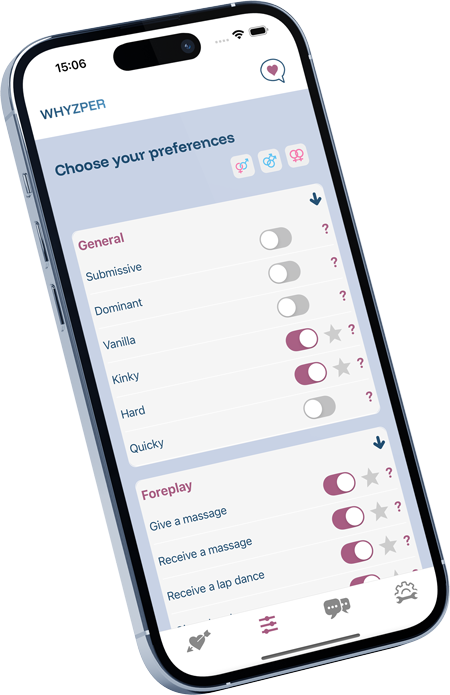
Ready to explore your desires together?
Whyzper lets you share your sexual desires playfully and without pressure – privately and only when both partners agree.
Download Whyzper for freeSpecial Situations
Mismatched libido plays out differently depending on your specific circumstances. Here’s how to address some common scenarios.
After Having Kids
This deserves its own category because the changes are so dramatic and often unexpected.
Touched-out is real. When you’ve spent all day with a toddler climbing on you, nursing an infant, or mediating sibling conflicts, your skin literally craves space. This doesn’t mean you don’t love your partner—it means your nervous system has reached its threshold for physical touch.
Sleep deprivation destroys desire. New parents often aren’t sleeping more than a few consecutive hours. When you’re that exhausted, survival takes precedence over everything else, including sex.
Hormones after birth affect everyone differently. Breastfeeding, postpartum hormonal shifts, and the physical recovery from pregnancy and birth all impact desire. For some, desire returns within months. For others, it takes a year or more. Both patterns are normal.
Mental load imbalance kills intimacy. When one partner carries the cognitive burden of managing the household, remembering appointments, and anticipating everyone’s needs, resentment builds. It’s hard to feel desire for a partner who functions more like another child you’re managing than an equal partner.
Solutions: Distribute mental load more fairly. Make “touched-out” a concept both partners understand without judgment. Prioritize sleep before prioritizing sex—seriously, a nap might do more for your sex life than anything else. Give the primary caregiver genuine breaks where they’re off-duty entirely. Redefine intimacy to include 10-minute connections when that’s all you can manage.
Medication Side Effects
SSRIs (antidepressants) commonly reduce libido and make orgasm difficult or impossible. Hormonal birth control affects some people dramatically. Blood pressure medications, allergy medications, and many others have sexual side effects.
Don’t stop medications without medical guidance, but do have honest conversations with your doctor about side effects. Sometimes alternative medications within the same class affect desire less. Sometimes adjusting dosage helps. Sometimes the tradeoff is worth it for mental or physical health, and you adapt your intimacy to work within those constraints.
Menopause and Andropause
Hormonal changes during menopause often reduce spontaneous desire and can cause physical changes (vaginal dryness, pain during intercourse) that make sex less appealing. Testosterone decline during male aging (andropause) can similarly affect desire and function.
Medical interventions exist. Hormone replacement therapy, topical estrogen, testosterone therapy—discuss options with a knowledgeable healthcare provider who specializes in sexual health.
Redefine what “sex” means. If penetration becomes uncomfortable, expand your definition to include other forms of physical intimacy. Many couples discover more variety and satisfaction when forced to get creative.
When It Might Actually Be Incompatibility
Rarely, but occasionally, mismatched libido reflects genuinely incompatible values around sexuality rather than just different desire patterns.
If one partner views sex as a core need for feeling connected and loved, while the other views it as a pleasant occasional activity but not essential—and neither is willing or able to adjust—you may be facing true incompatibility rather than a solvable challenge.
Some couples in this situation explore ethical non-monogamy with full consent and clear agreements. Others decide that despite love, the relationship can’t meet both partners’ needs. There’s no shame in either choice.
However, before concluding you’re incompatible, make sure you’ve genuinely tried the approaches in this article for at least 3-6 months. Most mismatched libido situations improve with effort, communication, and the right strategies.
Your Next Steps: A 4-Week Action Plan
You’ve absorbed a lot of information. Now let’s make it actionable with a clear roadmap.
Week 1: Assessment and Communication
Have a shame-free conversation. Choose a neutral time (not in bed, not after a rejected initiation). Each partner shares their experience without blame. Use “I” statements: “I feel…” rather than “You always…”
Identify your pattern. Are you in the pursuer-distancer cycle? Does stress affect you differently? Is one partner experiencing responsive desire while the other expects spontaneous desire?
List potential root causes. Stress? Hormones? Medications? Relationship tension? Sleep deprivation? Mental health? Write them down honestly.
Agree on a pressure-free period. Commit to 2-3 weeks where penetrative sex is off the table, but affection without expectation is encouraged.
Week 2-3: Address Root Causes and Rebuild Connection
Schedule medical appointments if hormones, medications, or health conditions might be factors.
Implement stress reduction. Even small changes help: 10-minute daily walks, meditation apps, saying no to one obligation, asking for help with overwhelming tasks.
Increase non-sexual physical touch. Hold hands while watching TV. 20-second hugs. Massage without expectation. Cuddle without it leading anywhere. Rebuild trust that touch is safe.
Weekly relationship check-ins. Fifteen minutes each week: What’s going well? What’s been challenging? What does each person need this week? Keep it shame-free and solution-focused.
Week 4: Experiment with Solutions
Try discrete signaling. Download Whyzper or create your own system where both partners can indicate interest without pressure. The key is that no one knows if they’re alone in their interest.
Schedule intimacy thoughtfully if both partners are comfortable with this approach. Remember: prioritize connection time, not guaranteed sex. Build flexibility in.
Redefine intimacy. Plan experiences together. Have deeper conversations. Explore non-sexual physical pleasure. Broaden what “connection” means beyond intercourse.
Celebrate small wins. Did you have a shame-free conversation about desire? That’s progress. Did physical touch happen without tension? That’s progress. Did you go a week without the pursuer-distancer cycle? That’s progress.
Ongoing: Maintenance and Adjustment
Monthly relationship check-ins where you specifically discuss intimacy: What’s working? What needs adjustment? How are both partners feeling?
Adjust as life changes. New job stress, health changes, kids’ schedule shifts—all affect desire. Expect to revisit strategies as circumstances evolve.
Therapy if you’re stuck. If after 8-12 weeks you’re not seeing improvement, couples therapy with a sex-positive therapist can provide professional guidance.
Keep communicating. The moment you stop talking about this is the moment resentment starts building again.
Timeline to Improvement
Week 1-2: Pressure relief, initial conversations, reduced tension
Week 3-4: Small reconnection moments, less avoidance of physical touch
Week 6-8: Noticeable shift in dynamic, reduced pursuer-distancer pattern
Month 3-4: Sustainable new patterns, both partners feeling more satisfied
Progress isn’t linear. Some weeks will feel like breakthroughs, others like setbacks. That’s normal. The trend over months matters more than any single week.
💡 How Whyzper Helps with Mismatched Libido:
✓ FlowSync: Signal your desires discreetly throughout the day—only get notified when both partners express interest
✓ No More Rejection: Prevents the painful “ask → decline → hurt feelings” cycle that damages both partners
✓ Removes Pressure: Lower-desire partners can indicate openness without feeling obligated; higher-desire partners avoid visible rejection
✓ Reduces Anxiety: 76% of beta-testing couples reported significantly less stress around intimacy initiation within 4 weeks
✓ Respects Responsive Desire: Partners with responsive desire can signal willingness even without spontaneous interest, knowing there’s no pressure if their partner isn’t interested
Conclusion: This Is Fixable
Mismatched libido feels isolating when you’re in the middle of it. One partner feels rejected and undesirable. The other feels guilty and broken. Both wonder if this means the relationship is doomed.
It’s not. This is one of the most common challenges couples face, and it’s solvable for the vast majority of relationships.
The solution isn’t about one partner changing their fundamental desire level to match the other. It’s about creating safety, removing pressure, understanding how desire actually works (responsive vs. spontaneous), addressing root causes, and finding strategies that respect both partners’ autonomy and needs.
Small, consistent changes create more lasting impact than dramatic overhauls. A conversation without blame. Physical touch without expectation. Understanding that your partner’s desire pattern isn’t rejection. Using tools that remove the emotional landmines from initiation. These incremental shifts compound over weeks and months into genuine transformation.
Your relationship can emerge from this challenge stronger than before. Many couples report that working through mismatched libido together—with patience, communication, and the right strategies—creates deeper intimacy and understanding than they had even in the honeymoon phase. Not because the problem was good, but because the process of solving it together built skills and connection that serve every aspect of the relationship.
You’re not broken. Your partner isn’t broken. Your relationship isn’t failing. You’re navigating one of the most common challenges couples face—and now you have the roadmap to navigate it successfully.