
After a fight, the most helpful move is often not to keep talking. If you’re both still activated, the goal is not immediate resolution. The goal is to stop adding harm, create a pause that still feels connected, and return when your nervous systems are steady enough to hear each other.
New to Whyzper? Discover how our app helps couples deepen their connection. Learn more about Whyzper!
That middle phase is where many couples get stuck. One person wants to fix it now. The other wants space. Both feel hurt, misunderstood, or defensive. And because the argument is still emotionally “live,” even small comments can land like fresh attacks.
Here’s the core truth: repair after conflict works better when you slow it down. A good pause is not avoidance, and a good restart is not pretending nothing happened. It’s a structured way to protect the relationship while emotions settle.
What “activated” means after a fight
Being activated means your body and mind are still in threat mode. You may feel shaky, angry, panicked, numb, sharp, or desperate to be understood. Your thoughts get narrower. Your tone gets harder. Listening becomes difficult, even if you care deeply about your partner.
- Pursue: push for answers, closeness, reassurance, or a conclusion right now
- Withdraw: shut down, go quiet, leave abruptly, or emotionally disappear
In that state, people often do one of two things:
Neither reaction automatically means someone is the problem. Often, both are trying to feel safer in different ways.
Why trying to solve it immediately often backfires
A useful definition: conflict repair is the process of reducing disconnection after a rupture and making it possible to reconnect with more clarity, accountability, and care.
- the original issue
- the way you spoke to each other
- the meaning you each make of the other person’s reaction
Many couples believe that if they stop talking, they’re failing. But when both people are flooded, staying in the conversation can turn one fight into three:
That is how a disagreement about plans, intimacy, household stress, jealousy, or feeling dismissed suddenly becomes: “You never care,” “You always leave,” or “Nothing gets through to you.”
Urgency is understandable. But urgency is not always wisdom.
How to pause without sounding like abandonment
If you want relationship healing, the immediate target is not perfect communication. It is enough safety to stop the spiral.
The difference between a damaging exit and a regulating pause is clarity.
- “I’m done.”
- “Whatever.”
- “You’re impossible.”
- silence, disappearing, or leaving without explanation
A harmful exit sounds like:
- “I want to talk about this, but I’m too activated to do it well right now.”
- “I’m not leaving the conversation forever. I need 30 minutes to calm down, then I want to come back.”
- “I care about us. I don’t want to say something cruel just because I’m flooded.”
- “Can we pause and restart at 8:00? I’m more likely to listen then.”
A repair-oriented pause sounds like:
- Name the state: “I’m overwhelmed” or “I’m getting too reactive.”
- Reassure the bond: “I’m not abandoning this.”
- Give a time frame: “Let’s come back in 20 minutes” or “after dinner.”
- Follow through: return when you said you would
The key elements are simple:
What not to say when you’re both still flooded
That last part matters. A pause builds trust only if it is real, not a disguised escape.
Avoid these during the activated phase
- “Calm down.” It usually feels dismissive, not calming.
- “You’re overreacting.” This adds invalidation to injury.
- “Here we go again.” It turns the moment into a character judgment.
- “You always…” / “You never…” Absolute language escalates defensiveness.
- “If you really loved me…” This turns pain into pressure.
- “Forget it.” Often heard as shutdown, contempt, or punishment.
- “I guess I’m just the bad guy.” This shifts the focus away from repair.
When emotions are high, certain phrases almost always intensify the rupture. Even if they hold some truth, they rarely help in the moment.
What to do during the pause so it actually helps
If you are too activated to speak kindly, speak less. Short, steady, non-accusing language is more effective than a long emotional argument.
A pause only works if it lowers activation. If you spend the break rehearsing your closing argument, drafting a devastating text, or collecting more evidence against your partner, you are not regulating. You are reloading.
- slow your breathing and unclench your body
- drink water or step outside briefly
- put your phone down for a few minutes
- write what you are feeling in one sentence: angry, hurt, scared, ashamed, lonely
- ask yourself, “What am I assuming right now?”
- separate impact from intent
- identify your actual need: reassurance, space, accountability, understanding, rest
Try instead:
A useful reset question is: “What do I want this conversation to create, not just prove?”
How to restart the conversation once you’re calmer
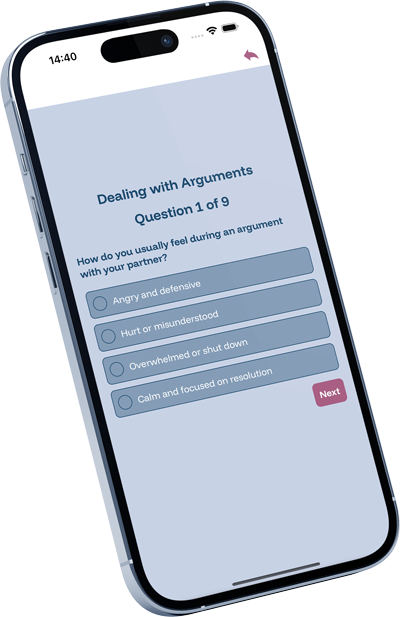
Ready for deeper conversations?
The DeepTalk feature in Whyzper guides you through meaningful questions to help strengthen your emotional connection.
Download Whyzper for freeA simple repair structure
- Start with intention.
“I want us to understand each other better, not fight harder.” - Name your part without self-erasing.
“I got sharp and defensive. I can see that made this worse.” - Describe impact, not character.
“When you walked away without saying when you’d come back, I felt abandoned.” - Stay specific.
Talk about this moment, not every past wound at once. - Ask one honest question.
“What was happening for you right then?” - Make one concrete request.
“Next time, can we pause with a time to reconnect?”
That question can interrupt the urge to win and bring you back to connection.
When you return, do not restart at full speed. Begin with a softer entry than the one that led to the rupture.
Examples of what to say after a fight
This is what relationship communication often needs after conflict: less analysis, more structure.
If you need to reopen the conversation
- “I’m calmer now. Are you open to trying again?”
- “I don’t want to leave this unresolved. Can we talk for 15 minutes and keep it gentle?”
- “I’ve had time to think, and I understand my part more clearly now.”
If you hurt your partner during the argument
- “I don’t feel good about how I spoke to you. I’m sorry for the tone I used.”
- “You were trying to tell me something important, and I got defensive.”
- “I can see why that landed painfully.”
If you felt abandoned or shut out
- “I respect needing space. What was hard for me was not knowing if we were coming back to this.”
- “A pause is okay with me. Silence without a plan is what spikes my anxiety.”
If you tend to pursue when anxious
- “I know I push when I’m scared we’re disconnecting.”
- “I’m trying to ask for reassurance without cornering you.”
If you tend to withdraw when overwhelmed
- “I shut down when I feel flooded, but I don’t want that to feel like rejection.”
- “I need a little space to regulate, and I will come back.”
The difference between pausing and stonewalling
If you’re wondering what to say after conflict, use language that is clear, grounded, and non-performative.
This matters because many people have experienced “space” as punishment.
A healthy pause is temporary, named, and followed by re-engagement.
Stonewalling feels like emotional disappearance: no clarity, no reassurance, no return, no willingness to repair.
Common mistakes couples make in the hard middle phase
- Trying to settle the entire relationship at once. Stay with the current rupture.
- Demanding immediate reassurance while attacking. People rarely open while being cornered.
- Using the pause to punish. Distance should regulate, not retaliate.
- Reopening by text with sarcasm or scorekeeping. Written messages can intensify misreading.
- Apologizing too vaguely. “Sorry you feel that way” is not repair.
- Restarting without a shared goal. Ask: are we trying to understand, decide, or repair?
What repair can look like in long-term relationships
If you are the one asking for space, your responsibility is to make the pause feel containable. If you are the one receiving that request, your responsibility is to respect the pause once it has been clearly and kindly communicated.
Both matter. Boundaries without care can feel cold. Care without boundaries can feel chaotic.
In long-term relationships, conflict is rarely just about the surface topic. It often touches deeper relationship patterns: feeling unseen, fearing rejection, protecting independence, longing for more emotional intimacy, or carrying stress from outside the relationship into it.
- The fight may be about texting back, but the hurt may be about feeling unimportant.
- The fight may be about sex or sexual intimacy, but the deeper pain may be pressure, fear of rejection, or loneliness.
- The fight may be about tone, but the real wound may be accumulated micro-rejection.
That does not mean every argument needs a couples therapy-level deep dive. But it does mean the repair often works best when you respond to the deeper emotional layer, not only the logistics.
For example:
A quick post-fight repair checklist
Repair becomes more effective when you can say, gently, “I think this touched something bigger for both of us.”
- Stop the spiral.
- Name the activation.
- Pause with reassurance and a return time.
- Regulate instead of rehearsing.
- Reopen gently.
- Own your part specifically.
- Talk about impact, not identity.
- Make one concrete request for next time.
FAQ: how to calm down and reconnect after a fight
How long should a pause after an argument be?
Sometimes couples use tools outside the heat of conflict to make these conversations easier. Whyzper can fit naturally here as a discreet, emotionally intelligent relationship companion that helps couples express feelings, preferences, and desires with less pressure and awkwardness. Not to replace real conversation, but to make reconnection feel safer and more possible.
Should we text during the pause?
If you need something simple to remember, use this:
What if one person wants to talk now and the other needs space?
Long enough to reduce reactivity, short enough that it does not feel like disappearance. For many couples, 20 to 60 minutes works. Sometimes longer is needed, but it helps to agree on a specific time to reconnect.
What if we keep having the same fight?
Usually keep it minimal. A brief message like “I’m still committed to talking later” can help. Detailed debate by text often reignites the conflict.
Final thought
Both needs are real. The best compromise is a structured pause: reassurance for the person who fears disconnection, and clear space for the person who is overwhelmed.
Recurring arguments often point to a deeper relationship dynamic, not just poor timing. Once you are calm, look for the repeating pattern underneath the topic: pursuit and withdrawal, criticism and defensiveness, pressure and shutdown, longing and fear.
You do not have to be perfectly calm, perfectly articulate, or perfectly healed to repair after a fight. You only need enough steadiness to stop turning pain into more pain.
In relationships, repair is not a polished performance. It is a series of small, honest moves: pausing without abandoning, returning without punishing, and speaking with enough care that the other person can stay in the room with you.