
If you want better sex and better emotional connection, one of the simplest habits you can build is a weekly relationship check-in. Not a heavy “we need to talk” moment. Not a performance review. Just a short, honest conversation that helps you stay emotionally close, sexually connected, and aware of each other before distance builds.
New to Whyzper? Discover how our app helps couples deepen their connection. Learn more about Whyzper!
For many couples, intimacy does not fade because love disappears. It fades because daily life gets louder than the relationship. Stress, routines, parenting, work, screens, and unspoken feelings can slowly crowd out curiosity and desire. A weekly check-in creates a small, repeatable space to come back to each other.
The best weekly check-in questions for couples are gentle, specific, and emotionally safe. They help you talk about feelings, needs, stress, desire, affection, and relationship patterns without blame or pressure. Over time, this kind of ritual can support emotional intimacy, relationship communication, and a more connected sex life.
What is a weekly relationship check-in?
A weekly relationship check-in is a dedicated conversation, usually 15 to 30 minutes long, where partners reflect on how they are doing individually and together.
Think of it as preventive care for your relationship. Instead of waiting until resentment, jealousy, hurt feelings, or libido differences become a bigger issue, you make space to notice small shifts early.
- strengthen emotional intimacy
- improve relationship communication
- reduce misunderstandings and defensiveness
- stay connected during stressful seasons
- talk about sexual desire in a lower-pressure way
- build trust, confidence, and closeness over time
A good check-in can help couples:
Why weekly check-ins can improve both sex and emotional connection
In long-term relationships especially, desire often responds to emotional safety, novelty, and feeling seen. Weekly check-ins support all three.
Better sex is rarely just about sex. It is often connected to the wider relationship dynamic: how appreciated you feel, how safe it is to be honest, whether stress is acknowledged, and whether affection exists outside sexual moments.
That is why weekly check-in questions matter. They create a rhythm of attention. And attention is one of the most underrated forms of intimacy.
When couples regularly ask, “How are we doing?” they are more likely to catch subtle disconnects before they harden into patterns. They also make it easier to talk about desire without making one partner feel pressured or the other feel rejected.
How to do a weekly couples check-in without making it awkward
Put simply: emotional intimacy and sexual intimacy often grow when communication feels safe, ongoing, and specific.
A simple framework
- Choose a regular time. Pick a consistent moment each week when neither of you is rushed.
- Keep it short. Twenty minutes is enough.
- Take turns. One person answers first, then the other.
- Stay curious. Ask follow-up questions to understand, not to debate.
- Do not try to solve everything. The goal is connection and clarity, not a perfect outcome.
Ground rules that help
- No interrupting
- No scorekeeping
- No forced disclosures
- No turning vulnerability into criticism
- No pressure for immediate sexual action after the conversation
The format matters almost as much as the questions. A check-in works best when it feels warm, structured, and low stakes.
The best weekly check-in questions for couples
That last point matters. If one partner starts to fear that every intimacy conversation must lead somewhere physical, honesty can shut down quickly.
1. Questions for emotional connection
- What felt close between us this week?
- Did you feel supported by me this week? When did you feel it most?
- Was there a moment you felt misunderstood, alone, or brushed off?
- What is something you wish I noticed more this week?
- How are you feeling emotionally right now, beyond “fine”?
You do not need to ask all of these every week. Choose 5 to 8 questions and rotate them. The goal is not volume. The goal is consistency and depth.
2. Questions for stress and relationship dynamics
- What has been taking up most of your energy lately?
- Is there anything outside our relationship affecting how you show up in it?
- Did we fall into any frustrating pattern this week?
- What felt heavy for you, and how can I support you better next week?
- Is there anything we need to talk about before it grows bigger?
These questions help couples notice emotional bids, micro-rejections, and moments of care that often go unspoken.
3. Questions for affection, intimacy, and desire
- When did you feel most connected to me physically or emotionally this week?
- Did you feel wanted, appreciated, or desired this week?
- What kind of affection felt especially good lately?
- Is there anything that would help intimacy feel easier or more natural right now?
- What helps you feel relaxed, open, and close to me these days?
Many relationship issues are not purely relationship issues. Stress, burnout, family pressure, and mental load can shape closeness more than couples realize.
4. Questions for appreciation and repair
- What is one thing I did this week that you appreciated?
- Is there anything I should apologize for, clarify, or revisit?
- Did I miss a moment when you needed tenderness or reassurance?
- What helped us feel like a team this week?
- What is one thing we did well together?
Notice the tone here: inviting, not demanding. These questions make room for sexual desire and sexual intimacy without pressure, performance, or explicit detail.
Appreciation protects relationships from becoming problem-only spaces. Repair keeps small hurts from becoming long-term resentment.
5. Questions for growth and playful curiosity
- What would you love more of in our relationship next week?
- What is something new we could try to feel more connected?
- What has been making you feel more like yourself lately?
- What would feel nourishing, fun, or energizing for us?
- What are you curious about in our relationship right now?
A sample 20-minute weekly check-in for couples
Curiosity is a quiet form of desire. It keeps a relationship from becoming purely logistical.
Minutes 1–3: Arrival
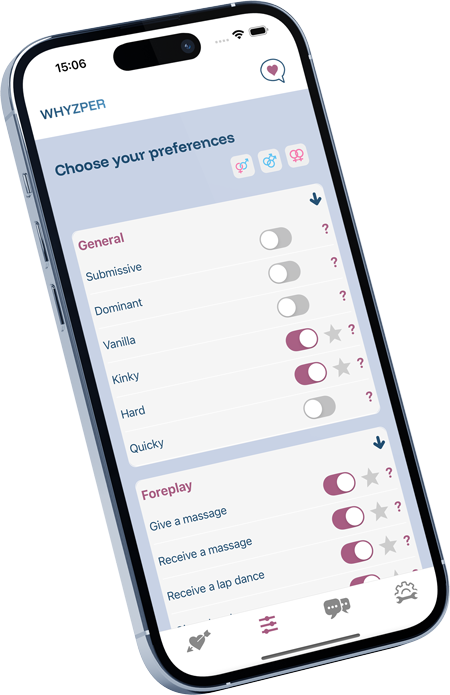
Ready to explore your desires together?
Whyzper lets you share your sexual desires playfully and without pressure – privately and only when both partners agree.
Download Whyzper for freeMinutes 4–8: Appreciation
If you want a practical structure, try this:
Minutes 9–14: Emotional reality
Ask: “How are you arriving into this conversation today?”
Minutes 15–18: Intimacy and closeness
Each partner shares one thing they appreciated this week.
Minutes 19–20: One small intention
Ask one emotional connection question and one stress question.
Ask one intimacy question, such as: “What helped you feel close to me this week?”
What makes a check-in actually work over time
Consistency beats intensity
End with: “What is one thing we want to carry into next week?”
Specific beats generic
This structure helps couples avoid two common traps: turning the check-in into conflict management only, or keeping it so vague that nothing meaningful gets said.
Safety beats honesty without care
You do not need a perfect conversation. You need a repeatable one. A calm 15-minute check-in every week is more powerful than one three-hour relationship summit every three months.
Small changes matter
“How are we?” is often too broad. “Did you feel supported by me this week?” gives your partner something real to answer.
Common mistakes to avoid
- Using the check-in to ambush your partner with a week’s worth of complaints
- Only talking when something is wrong
- Making desire a scorecard
- Demanding immediate solutions
- Skipping emotional context and jumping straight to sex
- Treating one partner as the “problem” to fix
Brutal honesty is not the goal. Honest kindness is. People open up more when they trust they will not be shamed, dismissed, or analyzed.
How Whyzper fits into this kind of relationship ritual
Better relationships are often built through tiny shifts: a more affectionate goodbye, a clearer bid for connection, a more thoughtful response after a hard day. Weekly check-ins help those shifts happen on purpose.
A healthy check-in is not couples therapy in miniature. It is a relationship habit that supports awareness, responsiveness, and trust.
For some couples, the hardest part is not caring. It is starting. It can feel surprisingly difficult to bring up desire, closeness, preferences, or emotional needs without making the moment feel heavy or awkward.
FAQ: Weekly check-in questions for couples
How often should couples do a relationship check-in?
That is where a tool like Whyzper can fit naturally. Whyzper is a discreet, emotionally intelligent relationship companion designed to help couples express intimacy, desire, and feelings with more ease. Not to replace real conversation, but to make it feel safer to begin.
How many questions should we ask in one check-in?
If weekly check-ins are your ritual, subtle prompts and shared reflection can help keep that ritual alive, especially during busy or emotionally crowded seasons.
Can weekly check-ins help with mismatched libido?
Weekly works well for most couples because it is frequent enough to catch issues early but not so constant that it feels forced. If weekly feels like too much, start every other week and build from there.
What if one partner does not like structured conversations?
Usually 5 to 8 questions is enough. Focus on depth, not quantity. A few honest answers are more helpful than rushing through a long list.
Final thought
They can help couples talk about desire with more empathy and less pressure. While they are not a cure-all, they often improve the emotional safety and communication that make libido differences easier to navigate together.
Keep it shorter, lighter, and more natural. A check-in can happen during a walk, over coffee, or at the end of a Sunday evening. Structure should support connection, not make it feel clinical.
The best weekly check-in questions for couples do not just help you talk more. They help you notice more: each other’s stress, tenderness, longing, effort, and inner world. That kind of attention can deepen emotional intimacy, support relationship healing, and create the conditions for better sex without turning intimacy into a task.