
Sexual reconnection after stress, parenthood, burnout, or emotional distance is possible, and it usually starts with less pressure, not more. Most couples do not rebuild intimacy by forcing chemistry on command. They rebuild it by restoring safety, easing performance anxiety, reconnecting emotionally, and creating small moments of trust that make desire more likely to return.
New to Whyzper? Discover how our app helps couples deepen their connection. Learn more about Whyzper!
If you are wondering how to reconnect sexually after a hard season, the short answer is this: go slower than your fear tells you to, lower the stakes, talk with kindness, and focus on rebuilding connection before expecting instant passion. A dry spell does not automatically mean a broken relationship. Often, it means your bond has been carrying too much stress for too long.
Whether the hard season was a new baby, work burnout, grief, health changes, conflict, long distance, or simply too much life at once, intimacy can feel different on the other side. That does not mean you have failed. It means your relationship needs a gentler on-ramp back into closeness.
Why sexual connection often changes after a hard season
Sexual intimacy is not separate from the rest of life. It is shaped by stress, sleep, hormones, resentment, mental load, body image, routine, and how emotionally safe each person feels. When a couple goes through a demanding season, desire often becomes less spontaneous and more context-dependent.
- Parenthood and postpartum adjustment
- Burnout or chronic stress
- Periods of conflict or emotional disconnection
- Long-distance phases
- Health changes, medication shifts, or fatigue
- Grief, loss, or major life transitions
This is especially common after:
What helps most: safety before spark
In other words, reduced sexual closeness is often a response, not a verdict. It is your relationship system saying, “We need repair, rest, and recalibration.”
Many couples make the same understandable mistake: they try to jump straight back into the old version of their sex life. But after a difficult season, the body and nervous system may not be ready for that. Pressure can make both partners feel watched, evaluated, or responsible for “fixing” things quickly.
A better approach is to prioritize safety before spark.
- Do we feel emotionally on the same team?
- Can we talk about intimacy without blame or panic?
- Does touch feel comforting, tense, neutral, or loaded?
- Do we have room for curiosity, or only expectations?
That means asking:
How to reconnect sexually: a compassionate roadmap
1. Name the season without turning it into a story about rejection
When people feel safe, desire has space to emerge. When people feel pressured, desire often retreats further.
Start by describing what happened in a neutral, shared way. This matters because many couples silently translate a dry spell into something much harsher: “You do not want me anymore,” “We lost our chemistry,” or “Something is wrong with us.”
- “We have been through a lot, and I think our intimacy got buried under survival mode.”
- “I miss feeling close to you, and I want us to find our way back gently.”
- “I do not want this to become pressure. I just want us to reconnect.”
Try language like:
2. Stop measuring progress only by sex
This frames the problem as something the two of you are facing together, not evidence that one person is failing the other.
If every moment of affection feels like it must lead somewhere, both partners can start avoiding closeness. A kiss feels loaded. A cuddle feels risky. A compliment feels like the start of a negotiation.
To rebuild intimacy, create space for affection that does not automatically carry expectations. This helps restore body trust and reduces the fear of “If I start, I have to finish.”
- Sitting close during a show
- Holding hands on a walk
- A longer hug at the end of the day
- A check-in text that feels warm, not logistical
- Gentle touch with explicit permission to keep it simple
Examples of low-pressure reconnection include:
3. Rebuild body trust, especially after parenthood or burnout
These are not lesser forms of intimacy. They are often the bridge back to erotic connection.
After childbirth, chronic stress, or exhaustion, people often feel disconnected from their bodies. They may feel touched out, self-conscious, overstimulated, numb, or simply too tired to access desire. This is not uncommon, and it is not a character flaw.
Body trust returns gradually. It grows when a person feels allowed to notice what feels good, neutral, unwelcome, or overwhelming without having to justify it.
- What kind of touch feels calming right now?
- What makes me tense up?
- What helps me feel more like myself in my body?
- What pace feels respectful instead of rushed?
Helpful questions include:
4. Make emotional reconnection more explicit
For some couples, this stage is less about chemistry and more about relearning comfort. That is real progress.
Sexual distance is not always caused by emotional distance, but emotional reconnection often helps. Many people cannot access desire easily when they feel unseen, resentful, or stuck in task mode.
- Ask one non-logistical question a day
- Share one feeling instead of one update
- Offer appreciation that is specific and believable
- Repair small ruptures sooner instead of letting them pile up
You do not need a giant relationship summit. Small moments of emotional availability matter:
Feeling emotionally chosen during ordinary life can make physical closeness feel more natural again.
5. Trade pressure for invitations
Whyzper can fit naturally here as a discreet, emotionally intelligent relationship companion that helps couples express desire, preferences, and feelings more easily, especially when direct conversations feel heavy or awkward. The goal is not to replace real connection, but to make it gentler to begin.
When couples feel anxious about a dry spell, they often communicate in ways that increase tension without meaning to. Comments become loaded. Initiation becomes testing. Silence becomes interpretation.
An invitation sounds different from pressure.
- “We need to fix this.”
- “Why does this never happen anymore?”
- “Are you even attracted to me?”
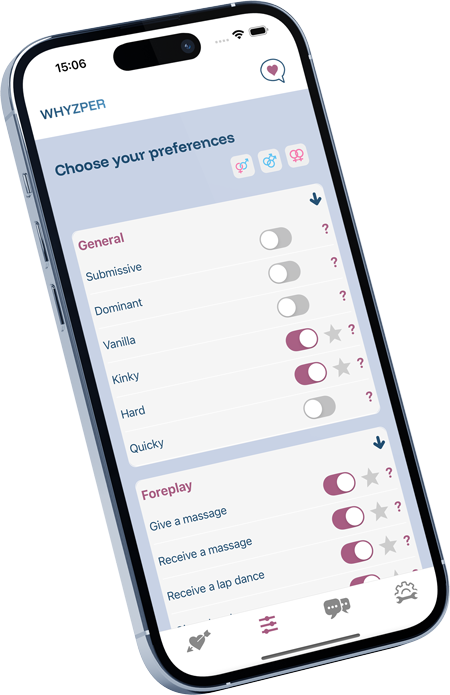
Ready to explore your desires together?
Whyzper lets you share your sexual desires playfully and without pressure – privately and only when both partners agree.
Download Whyzper for free- “Would you be open to a little closeness tonight, even if it is just cuddling?”
- “I miss us. What helps you feel close lately?”
- “Can we make space for connection this week without forcing anything?”
Pressure says:
6. Create low-pressure momentum instead of waiting for spontaneity
Invitation says:
Invitations preserve dignity. They create room for honesty without turning intimacy into a pass-fail test.
After a difficult season, many couples wait for desire to return exactly the way it used to. But in long-term relationships, desire often responds to context, energy, and intentionality. Waiting for a perfect spontaneous moment can keep couples stuck for months.
- Protecting a little time without screens or chores
- Going to bed at the same time once or twice a week
- Planning a date that is not about problem-solving
- Agreeing that closeness does not need a specific outcome
Low-pressure momentum means making room for connection before you feel perfectly ready. Not forcing. Not performing. Just making it easier for closeness to happen.
This can look like:
After having a baby: what many couples need to hear
Momentum matters because intimacy is easier to rebuild through repeated, safe experiences than through one dramatic attempt.
If your hard season was becoming parents, it helps to say this clearly: postpartum intimacy is not a race back to normal. Bodies change. sleep changes. identity changes. Time changes. Desire may change too.
- Reducing hidden pressure around timelines
- Talking openly about touch, energy, and overwhelm
- Sharing the mental load more fairly
- Making affection feel safe and non-demanding
- Letting intimacy be adaptive rather than idealized
For many couples, the task is not “getting back” to the old dynamic. It is creating a new one that respects recovery, exhaustion, mental load, and the need for gentleness.
After burnout or chronic stress: desire may need recovery time
What often helps after a baby:
It is common to miss your old connection. It is also common to build something slower, wiser, and more sustainable in this next chapter.
Burnout affects more than mood. It can flatten pleasure, reduce patience, disrupt body awareness, and make even welcome touch feel like one more demand. If one or both of you have been running on empty, your sex life may have paused because your system was protecting basic functioning.
Myth vs. reality when reconnecting sexually
Myth: If we loved each other enough, it would happen naturally
That does not mean desire is gone. It may mean desire needs conditions it has not had in a while: rest, ease, emotional softness, and less performance pressure.
Myth: We should jump back in and stop overthinking it
A useful reframe is this: exhausted people do not always need more effort. They often need more permission.
Myth: If one partner wants more, the other is withholding
Reality: Long-term intimacy is shaped by life conditions, not just love. Intention is not a sign of failure. It is often a sign of care.
Myth: Progress only counts if sex is happening regularly again
Reality: Going too fast can increase tension. Pacing helps the body and relationship catch up.
Signs you are moving in the right direction
Reality: Desire differences often reflect stress, context, and nervous system state more than rejection.
- You can talk about intimacy with less fear
- Touch feels less loaded or avoidant
- You feel more emotionally warm toward each other
- There is more curiosity and less scorekeeping
- You recover more quickly from awkward moments
Reality: Reduced defensiveness, easier affection, better communication, and more body comfort are all signs of meaningful repair.
When to slow down even more
Reconnection is usually subtle before it is dramatic. Look for signs like:
These shifts may seem small, but they are often exactly how sexual connection returns: through safety, not force.
FAQ: reconnecting sexually after a dry spell
How long does it take for couples to reconnect sexually after stress?
If conversations about sex quickly become fights, shutdowns, panic, or deep hurt, that is a sign to reduce pressure and focus first on emotional repair and communication. You do not need to diagnose the relationship to recognize that the current pace is not helping.
Is it normal to love your partner and still not feel much sexual desire during burnout or parenthood?
Sometimes the most intimate move is saying, “Let’s stop trying to solve this in one conversation and build trust again.”
Should we talk about sex directly, or will that make it more awkward?
There is no universal timeline. It depends on what caused the distance, how safe both partners feel, and whether the relationship can reduce pressure while building consistent closeness. In many cases, steady small changes work better than trying to rush a breakthrough.
What if one partner is ready sooner than the other?
Yes. Love and desire are connected, but they are not identical. Exhaustion, overwhelm, body changes, and mental load can reduce access to desire even in loving relationships.
The takeaway
Usually, gentle directness helps more than silence. The key is tone. Conversations go better when they are framed around curiosity, teamwork, and low pressure rather than blame or urgency.
That is common. The goal is not to declare one person right and the other wrong. It is to find a pace that protects both honesty and safety, so neither partner feels abandoned or pushed.