
Romance in long-term relationships usually does not disappear because love disappears. More often, it gets buried under logistics, fatigue, stress, and repetition. The good news is that connection does not always need a big reset. In many cases, what helps most is a set of small, repeatable relationship rituals that bring back warmth, playfulness, admiration, and intimacy.
New to Whyzper? Discover how our app helps couples deepen their connection. Learn more about Whyzper!
A relationship ritual is a recurring habit with emotional meaning. It is not just “something you do.” It is a small pattern that quietly says: we return to each other, we notice each other, we make space for us. That can look like a 20-second reunion hug, a Friday night mood shift, a private end-of-day phrase, or a weekly check-in that feels caring instead of clinical.
If you want more romance, playfulness, and intimacy, start smaller than you think. The best couple rituals are easy to repeat, low-pressure, and emotionally safe. They create anticipation without turning connection into another task.
Why relationship rituals matter more than random romantic gestures
Grand gestures are memorable, but rituals are what shape the emotional climate of a relationship. A surprise weekend away can be wonderful. But if daily life feels rushed, distant, or transactional, one big romantic moment will not carry the whole connection.
Rituals work because they reduce friction. Instead of waiting for the perfect mood, the perfect timing, or a burst of spontaneous energy, you create small rhythms that make closeness more likely. Over time, those rhythms influence relationship dynamics in a powerful way.
- Emotional intimacy through repeated moments of attunement
- Sexual intimacy by building anticipation, warmth, and safety
- Relationship communication without making every conversation heavy
- Confidence and self-empowerment because both partners know how to reconnect
- Relationship growth through habits that strengthen your sense of team
Healthy rituals can support:
What makes a good couple ritual?
This is one reason rituals often come up in couples therapy and relationship improvement work. Not because they are magical, but because repeated behavior shapes how love feels on an ordinary Tuesday.
1. It is small
The best relationship rituals share a few qualities. They are simple enough to repeat, meaningful enough to matter, and flexible enough to survive real life.
2. It feels mutual, not forced
If a ritual requires perfect energy, perfect timing, or a full free evening, it will probably fade. Small wins are more sustainable than ambitious plans.
3. It has emotional meaning
A ritual should invite connection, not create pressure. If one person experiences it as an obligation, it stops feeling intimate.
4. It fits your relationship patterns
The action itself can be tiny. What matters is the message underneath: I see you. I choose us. I am glad you are here.
The best relationship rituals for more romance, playfulness, and intimacy
Some couples thrive on verbal rituals. Others connect more through touch, humor, routine, or shared environment. The right ritual is the one you will actually use.
1. The reunion ritual: reconnect before logistics
You do not need all of these. Pick one or two that feel natural, then build from there.
One of the most effective habits for couples is surprisingly simple: when you reunite after work, errands, or time apart, greet each other before talking about tasks.
- a real hello instead of a distracted nod
- a six-second kiss or a longer hug
- eye contact and one warm sentence
- putting your phone down for the first minute
That might mean:
This ritual matters because the first moments of reunion often set the tone for the rest of the evening. If your default is “Did you answer that email?” or “Who is making dinner?” your bond can start to feel managerial. A warm reunion re-humanizes the relationship.
2. The two-minute transition ritual
Try a phrase like, “Hi love, I’m glad to see you,” or “Come here first.” It is simple, but it changes the atmosphere.
Many couples do not need more time together as much as they need a better transition into togetherness. If one person is still mentally at work and the other is already in home mode, friction rises fast.
- two minutes of quiet sitting together before doing anything else
- making tea and asking, “What kind of evening do you have in you?”
- changing clothes, lighting a lamp, and starting the same playlist
Create a short transition ritual at the end of the day. For example:
3. A daily admiration ritual
The point is not performance. The point is signaling: we are shifting out of the outside world and into our shared space.
Long-term relationships often suffer less from lack of love than from lack of active appreciation. Admiration is one of the most underrated forms of intimacy.
- “I loved how patient you were earlier.”
- “You looked really good when you laughed like that.”
- “Thank you for making this day easier.”
A daily admiration ritual can be as small as naming one thing you appreciated that day:
4. The private cue ritual
This is not fake positivity. It is intentional noticing. Feeling seen is deeply regulating in a relationship, and it helps counter the drift into criticism, assumption, or emotional autopilot.
Some of the strongest couple rituals are almost invisible from the outside. A private cue can be a phrase, emoji, touch, glance, or inside joke that means something only to the two of you.
- a text that says, “Tonight feels like an us night”
- a hand squeeze that means “I’m with you”
- a code word for “I want closeness, but I don’t want pressure”
- a playful nickname used only in tender moments
Examples include:
Private cues create intimacy because they build a shared emotional language. They can also make relationship communication easier, especially around desire, emotions, or vulnerable relationship topics that are hard to say directly.
5. The no-admin micro-date
Whyzper fits naturally into this kind of ritual. For couples who want a more discreet, emotionally intelligent way to express closeness, curiosity, or desire, it can support the subtle signals that keep connection alive without making things awkward or intense.
Many couples spend time together without actually feeling together. A no-admin micro-date is 15 to 30 minutes where practical topics are off-limits. No bills, schedules, repairs, childcare logistics, or inbox talk.
- share dessert on the couch
- walk around the block
- sit on the balcony with music
- ask one playful or reflective question
Instead, you might:
This kind of ritual helps couples remember that their relationship is not just a coordination system. It is a living bond that needs texture, flirtation, and room to breathe.
6. The weekly mood shift ritual
One of the best ways to protect romance is to create a predictable shift in energy once a week. It does not need to be a formal date night. It just needs to feel distinct from regular life.
- Friday candles and takeout
- Sunday morning coffee in bed
- Wednesday “phones away” evening
- Saturday afternoon wandering with no agenda
Your weekly mood shift could look like:
7. The end-of-day closing ritual
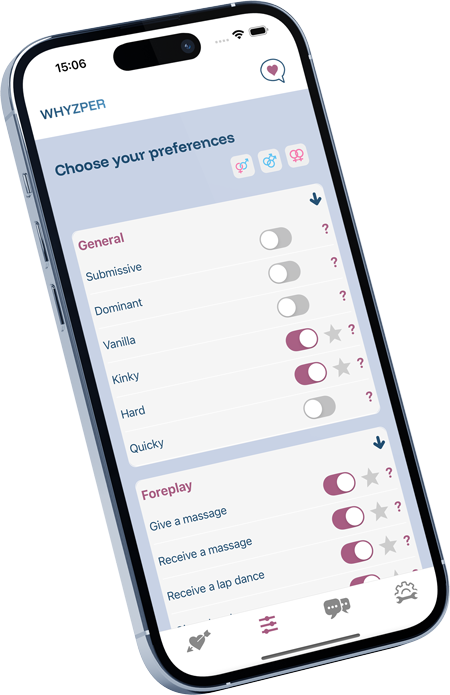
Ready to explore your desires together?
Whyzper lets you share your sexual desires playfully and without pressure – privately and only when both partners agree.
Download Whyzper for freeWhat matters is the emotional contrast. Humans respond to rhythm. When there is a recurring moment that feels softer, lighter, or more intentional, the relationship gets a built-in space for repair and renewal.
- asking, “What felt heavy today, and what felt good?”
- saying one thing you are leaving behind from the day
- a goodnight kiss with no screens in hand
- a short cuddle, hand hold, or forehead touch before sleep
How you end the day matters almost as much as how you begin it. A closing ritual helps prevent the relationship from dissolving into parallel exhaustion.
8. The flirtation touchpoint
This can be very simple:
For couples navigating stress, kids, demanding work, or libido differences, this ritual can be especially grounding. It keeps emotional intimacy alive even when energy is low. And importantly, it does not require every night to become a deep talk.
- a playful midday text
- a compliment with a little spark in it
- a “thinking of you” voice note
- a recurring wink, touch, or phrase that carries affectionate tension
Playfulness often fades not because attraction is gone, but because people stop signaling it in small ways. A flirtation ritual helps keep the relationship warm without turning every gesture into a demand.
9. The weekly check-in that does not feel like a performance review
Try:
This is where subtle sensuality matters. Not every intimate signal has to lead somewhere. In fact, many couples feel more desire when affectionate and playful contact exists without immediate pressure or expectation.
- What helped you feel close to me this week?
- What felt stressful or off?
- What would feel supportive next week?
- Is there anything we want more of lately?
Relationship check-ins can be helpful, but only if they feel safe and human. A good weekly ritual is less about fixing each other and more about staying oriented.
10. The shared world ritual
Keep it compact. Try these prompts:
This kind of rhythm supports relationship healing and relationship growth because it catches distance early. It also reduces the chance that resentment, jealousy, or unmet needs build up in silence.
- watching one series together and saving it only for each other
- keeping a note of places you want to visit
- sending each other songs that match your mood
- having a monthly ritual of trying something new
Couples need more than maintenance. They also need a shared inner world. That means having something that belongs to both of you beyond chores and responsibilities.
11. The repair ritual after tension
A shared world ritual could be:
Novelty supports closeness. It gives the relationship fresh material and helps protect against the “same old, same old” feeling that can flatten romance in long-term relationships.
- a phrase like, “Can we start softer?”
- a hug after cooling down
- a short walk before resuming a hard conversation
- naming one thing you understand about the other person’s perspective
No relationship avoids disconnection. What matters is how couples return after friction. A repair ritual makes reconnection easier because it gives you a known path back.
12. The monthly “us” reset
This might be:
Repair rituals do not erase hurt, and they are not a substitute for accountability. But they can interrupt destructive relationship patterns where distance lingers longer than necessary.
- energy and stress levels
- emotional intimacy
- playfulness and quality time
- desire, affection, and closeness
- anything that feels tender, hopeful, or unfinished
Some rituals are daily. Others work better monthly. Once a month, take 30 to 60 minutes to ask: What is our relationship needing lately?
Myth vs. reality: what rituals can and cannot do
Myth: Rituals are boring because they are routine
You might talk about:
Myth: If love is real, connection should be spontaneous
This ritual is not about finding problems. It is about staying responsive to the season you are in. Relationships are living systems. What worked three months ago may need updating now.
Myth: Rituals only help when a relationship is struggling
Reality: The right routine creates safety, and safety often makes playfulness more possible. Predictability and excitement are not opposites. In healthy relationships, they often support each other.
How to start a ritual without making it feel awkward
Reality: Modern life is full. Intimacy often needs intention. Planning for connection does not make it less genuine. It makes it more likely.
Reality: Rituals are just as useful in good relationships. They help preserve closeness before distance becomes a bigger issue.
- “I miss our softer moments. Want to try a tiny ritual this week?”
- “I think it would be nice if we had a better end-of-day routine.”
- “Can we make Fridays feel a little more like ours again?”
This is where many couples get stuck. The idea sounds good, but introducing it can feel strangely formal. Keep it light.
Try one of these approaches:
How to know a ritual is working
Then make it easy to succeed. Choose one ritual. Keep it small. Try it for a week or two. Adjust if needed.
- feeling more seen
- less emotional distance
- more softness after stress
- more flirtation or affection
- a stronger sense of “we”
The goal is not to become the perfect couple with the perfect relationship habits. The goal is to create more moments that feel warm, intentional, and true to you.
FAQ: relationship rituals for couples
What is the difference between a habit and a relationship ritual?
A ritual is working if it creates even a slight increase in any of the following:
How often should couples do relationship rituals?
The shift may be subtle at first. Many of the best relationship improvements are. But subtle does not mean small. Repeated moments change relationship dynamics over time.
Can rituals help with intimacy in long-term relationships?
A habit is something you do regularly. A relationship ritual is a repeated action with shared emotional meaning. It helps reinforce connection, intimacy, or identity as a couple.
What if one partner is less enthusiastic?
Daily rituals can be very small, like a reunion hug or a goodnight phrase. Weekly and monthly rituals can be slightly bigger, like a check-in or a mood shift evening. Consistency matters more than frequency.
Final thought: romance grows where attention returns
Yes. Relationship rituals can support emotional intimacy, sexual desire, affection, and closeness by creating safety, anticipation, and regular moments of connection without pressure.
Start with the least demanding option. Pick something brief, natural, and low-pressure. The best rituals feel supportive, not imposed. Mutual comfort matters more than doing it perfectly.
In many relationships, the real problem is not lack of love. It is lack of ritualized attention. When couples stop marking reunion, admiration, play, repair, and rest, connection can start to feel accidental.