
Many people think sexual desire is supposed to work like a lightning strike: sudden, obvious, and impossible to miss. If it does not show up that way, they worry something is wrong with them, their partner, or the relationship. But that belief leaves out one of the most important things couples can learn: desire does not show up in only one style.
New to Whyzper? Discover how our app helps couples deepen their connection. Learn more about Whyzper!
The short answer is this: spontaneous desire appears before anything is happening, while responsive desire tends to emerge after connection, context, or stimulation begins. Neither is better. Neither is more loving. Neither tells you everything about attraction.
For many couples, this distinction is a huge relief. It helps explain why one partner rarely initiates, why desire may feel easier on vacation than on a random Tuesday night, and why intimacy in long-term relationships often depends less on instant urge and more on emotional and relational conditions. Once you understand that, it becomes much easier to stop turning desire differences into rejection stories.
What is spontaneous desire?
Spontaneous desire is the kind most people have been taught to expect. It shows up first. You feel in the mood seemingly out of nowhere, and then you want to act on that feeling.
In simple terms, spontaneous desire sounds like: “I want intimacy right now.”
This style is real, common, and often heavily represented in movies, media, and early-stage attraction. It can feel exciting because the desire arrives before much effort, planning, or warm-up is needed.
What is responsive desire?
But spontaneous desire is not the only normal way desire works. And it is not the gold standard for a healthy relationship.
Responsive desire tends to come after something begins. That “something” might be emotional closeness, affectionate touch, feeling relaxed, flirtation, privacy, a sense of safety, or simply having enough mental space to notice your own body and feelings.
In simple terms, responsive desire sounds like: “I wasn’t really thinking about intimacy, but now that we’re connecting, I can feel desire growing.”
This is also completely normal. In fact, many people experience desire this way, especially in long-term relationships, during stressful life phases, or when daily responsibilities compete with erotic energy.
Responsive desire vs. spontaneous desire: the core difference
Responsive desire does not mean fake desire, lower desire, or broken desire. It means desire often needs context.
- Spontaneous desire starts before connection begins.
- Responsive desire starts in response to connection, context, or arousal already building.
If you want the clearest distinction, it is this:
That difference matters because many couples misread timing as meaning.
- “If you wanted me, you would already feel it.”
- “If I do not feel desire instantly, I must not be attracted.”
- “If my partner does not initiate, they must not care.”
They assume:
Those interpretations are often painful—and often wrong.
Why this matters so much in long-term relationships
A more accurate view is this: desire is not only about attraction. It is also shaped by stress, nervous system state, relationship dynamics, routine, exhaustion, emotional safety, and the realities of adult life.
In the beginning of a relationship, novelty can make desire feel more automatic. There is anticipation, uncertainty, fantasy, and fewer daily pressures woven into the bond. Over time, real life enters the room: work, chores, parenting, mental load, health changes, conflict, and fatigue.
That does not mean the relationship has lost chemistry. It often means desire now depends more on conditions than on momentum alone.
This is where many couples get stuck. One partner may still expect desire to appear spontaneously and interpret anything else as a problem. The other may quietly think, “I love you, but I need a runway, not a switch.” Without language for that difference, both people can feel alone.
Common myths that make couples take desire personally
Myth 1: Spontaneous desire is the healthy kind
Understanding desire styles can reduce shame on both sides. The partner who wants more initiation stops assuming they are unwanted. The partner who rarely feels instant desire stops assuming they are failing.
Myth 2: If desire is responsive, it is less real
Reality: It is just one desire style. Responsive desire is equally valid and common.
Myth 3: The partner who initiates less is less attracted
Reality: Desire that grows through connection is still real desire. It simply has a different starting point.
Myth 4: Good intimacy should be effortless
Reality: Low initiation and low attraction are not the same thing. Some people want closeness but do not experience the urge to start from zero.
Signs you may lean more responsive
Reality: In long-term relationships, good intimacy is often intentional. Effort does not make it less authentic. It often makes it more sustainable.
- You rarely feel in the mood out of nowhere.
- Desire is easier once affection or closeness has already started.
- Stress, clutter, resentment, or exhaustion shut desire down quickly.
- You need time to transition from daily life into intimacy.
- You enjoy intimacy once you are there, even if you did not initiate it.
You might identify with responsive desire if:
Signs you may lean more spontaneous
None of these signs mean something is wrong. They may simply describe how your desire system works.
- You think about intimacy before anything has started.
- You often feel desire as a clear internal urge.
- You are more likely to initiate based on that urge.
- You can feel confused or hurt when your partner does not respond the same way.
You might identify more with spontaneous desire if:
What couples often get wrong about initiation
This style is valid too. The challenge is not having spontaneous desire. The challenge is assuming it should be universal.
One of the most emotionally loaded parts of this conversation is initiation. Many people use initiation as proof of love, confidence, attraction, or relational health. So when one partner initiates more often, the imbalance can start to feel deeply personal.
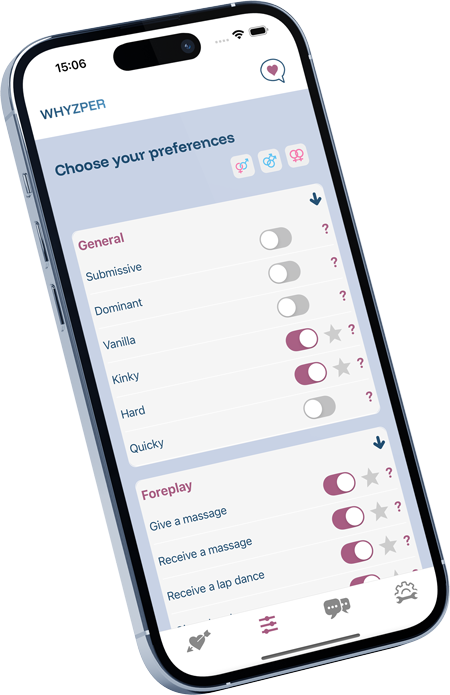
Ready to explore your desires together?
Whyzper lets you share your sexual desires playfully and without pressure – privately and only when both partners agree.
Download Whyzper for freeBut initiation is not a perfect measure of desire.
A partner with responsive desire may genuinely enjoy intimacy and still rarely initiate because they are not starting from a pre-existing feeling of wanting it. They may need an invitation, a softer lead-in, or a sense of emotional spaciousness before desire becomes available.
That does not mean the other partner should carry all the responsibility. It means couples often need a more nuanced approach than “who wants it more?”
How understanding desire styles reduces pressure and rejection
A better question is: “What helps desire become possible for each of us?”
- One person reaches out.
- The other does not feel immediate desire.
- The first person feels rejected.
- The second person feels pressured or guilty.
- Both withdraw.
When couples do not understand responsive desire, they often fall into painful loops:
- “Not now” does not automatically mean “not you.”
- “I need time” does not automatically mean “I am disconnected.”
- “I want more initiation” becomes a conversation, not an accusation.
Over time, that loop can create defensiveness, avoidance, and self-doubt.
What actually helps when desire styles differ
1. Stop using one style as the standard
When couples understand desire styles, the story can change:
2. Talk about conditions, not character
This shift matters because pressure is rarely an aphrodisiac. Feeling emotionally cornered usually makes desire harder, not easier.
3. Make room for transition time
If spontaneous desire is treated as the only legitimate kind, responsive partners will keep feeling defective. If responsive desire is treated as the only mature kind, spontaneous partners may feel shamed for wanting immediacy. Both styles deserve respect.
4. Reduce the all-or-nothing mindset
Try moving away from labels like “needy,” “cold,” “too much,” or “never interested.” Talk instead about patterns and conditions. What increases openness? What drains it? What helps each person feel safe, wanted, and relaxed?
5. Protect emotional safety
Many people do not move from work mode, parent mode, or stress mode into intimacy mode instantly. Emotional decompression matters. So does context.
6. Use support tools that lower awkwardness
Connection does not need to begin with certainty. Sometimes desire grows gradually. Sometimes it does not. A healthier dynamic leaves room for curiosity without obligation.
What responsive desire is not
Desire grows more easily where there is less criticism, scorekeeping, and fear of disappointing each other. Feeling judged tends to shut people down.
- proof that you are broken
- proof that you no longer love your partner
- the same as never wanting intimacy
- a moral failure
- something you need to feel ashamed of
For some couples, direct conversations about intimacy feel heavy or loaded. A discreet, emotionally intelligent tool like Whyzper can help partners express preferences, moods, and closeness more gently—without turning every vulnerable moment into a high-pressure talk. The point is not to replace real connection, but to make connection easier to begin.
Because this topic is often misunderstood, it helps to be especially clear. Responsive desire is not:
A more compassionate script for couples
It is simply one way desire can work.
That said, if intimacy has become consistently distressing, avoidant, or conflict-filled, the issue may not be desire style alone. Broader relationship patterns, unresolved hurt, stress, or life transitions can all influence closeness. The goal is not to oversimplify, but to replace blame with better understanding.
- “You never want me.”
- “You only care when I start it.”
- “What is wrong with you?”
If this topic has become tense in your relationship, try language that lowers defensiveness.
- “I think we may experience desire differently.”
- “I want us to understand each other better, not blame each other.”
- “What helps you feel open to closeness?”
- “What makes intimacy feel pressured instead of inviting?”
Instead of:
FAQ: Responsive and spontaneous desire
Is responsive desire normal?
Try:
Does responsive desire mean low libido?
These questions create room for honesty. And honesty, when it feels safe, is often more useful than assumptions.
Why does my partner rarely initiate?
Yes. Responsive desire is a normal and common desire pattern, especially in long-term relationships and during stressful life phases.
Can couples have different desire styles and still have a good relationship?
Not necessarily. It means desire often needs context to emerge. Someone can have responsive desire and still deeply value and enjoy intimacy.
The takeaway couples need most
There can be many reasons, but one common reason is that they do not often experience spontaneous desire. That does not automatically mean low attraction or low love.
Absolutely. Many couples do. The key is understanding the difference, reducing pressure, and building a shared approach that respects both people.
If you remember one thing, let it be this: the timing of desire is not the same as the depth of desire.
Some people feel it first and then seek connection. Others find it through connection. Neither style is superior. Neither should be used as evidence of love, worth, or desirability.
For couples, this understanding can be quietly transformative. It softens rejection stories. It reduces self-doubt. And it opens the door to a more mature, more compassionate view of intimacy—one built less on myths and more on how real people actually work.