
Sometimes the issue is not that love is gone. It is that intimacy has quietly moved from feeling inviting to feeling expected.
New to Whyzper? Discover how our app helps couples deepen their connection. Learn more about Whyzper!
If sex or closeness has started to feel like a task, a duty, or one more thing on an already crowded mental list, that does not automatically mean your relationship is broken. In many long-term relationships, intimacy becomes strained not because partners do not care, but because stress, emotional buildup, unresolved friction, and subtle performance pressure make wanting harder to access.
The good news is that intimacy usually returns more easily when couples stop treating it like a problem to solve on demand. Warmth grows better in safety than in pressure. Desire tends to come back when both people feel less managed, less judged, and more understood.
Why intimacy can start to feel like a chore
When people search for why sex feels forced or why intimacy feels like an obligation, they are often looking for one clear cause. Usually, there is not just one. It is more often a relationship pattern made up of several small forces that quietly drain ease.
- one or both partners are chronically stressed or overstretched
- mental load leaves little room for playfulness or presence
- there is unresolved resentment, disappointment, or tension
- touch starts to feel like it always has to lead somewhere
- one partner feels pursued while the other feels rejected
- there are unspoken expectations around frequency, timing, or “normal” desire
- closeness becomes performative instead of mutual
Intimacy can start to feel like work when:
What this shift usually does not mean
In other words: intimacy often becomes difficult long before the bedroom. It changes in the atmosphere of the relationship, in the pace of daily life, and in how safe or pressured each person feels.
It is easy to personalize the change. Many couples quickly translate it into a painful story: “You do not want me anymore,” “Something is wrong with me,” or “We have lost the spark for good.”
Sometimes attraction issues do matter. But often, the more accurate explanation is less dramatic and more fixable: your nervous systems are overloaded, your relationship has become too functional, or intimacy has become associated with pressure instead of relief.
The most common hidden intimacy drains
1. Stress narrows access to desire
A useful sentence to remember is this: when intimacy feels like a task, the problem is often not lack of love but lack of spaciousness.
Many people cannot switch directly from productivity mode into connection mode. If your day has been full of deadlines, caregiving, admin, conflict, or constant digital input, your body may still be in management mode. That makes tenderness, curiosity, and sexual desire harder to reach.
2. Mental load kills anticipation
This does not mean you are doing intimacy wrong. It means your system may need a gentler transition.
Desire rarely thrives when one partner is carrying the invisible logistics of life. If someone is keeping track of meals, schedules, chores, emotional climate, and practical details, they may look “fine” from the outside while feeling internally maxed out.
3. Unresolved tension changes the emotional texture
In that state, intimacy can start to feel like another request rather than a refuge.
You do not need a major crisis for intimacy to feel off. Small hurts, repeated misunderstandings, defensiveness, or feeling unseen can build up over time. Even when couples are functioning well on paper, emotional static can make closeness feel harder.
4. Pressure makes the body say no
People often say, “Nothing is terribly wrong.” That may be true. But “not terrible” is not the same as emotionally open.
Pressure does not have to be explicit to be powerful. It can show up as sighs, disappointment, repeated initiation after a no, keeping score, or the sense that affection must lead to sex. Even loving relationships can accidentally create this dynamic.
5. Performance replaces connection
Once intimacy feels loaded with expectation, many people begin to brace instead of soften.
How to bring back warmth without adding more pressure
When couples become overly focused on whether intimacy is happening enough, whether it is “good,” or whether they are meeting an invisible standard, they often lose the very thing they are trying to restore. Intimacy works best when it feels relational, not evaluative.
Start with reducing pressure, not increasing effort
If intimacy feels forced, the answer is usually not to push harder. It is to rebuild the conditions that make closeness feel natural again.
This sounds simple, but it can be deeply relieving. Instead of making intimacy another relationship task, try lowering the emotional stakes around it for a while.
- stopping frequency negotiations for the moment
- separating affection from expectation
- making room for touch that does not have to escalate
- allowing honesty without punishment or panic
That might mean:
Shift from “How do we fix sex?” to “What makes us feel safe and close?”
Many couples reconnect faster when both people know that closeness is welcome, but not demanded.
This is often the more useful question. Sexual intimacy is strongly shaped by emotional intimacy, trust, and everyday relationship dynamics. If the relationship atmosphere feels tense, transactional, or brittle, desire may struggle.
Try noticing what increases warmth outside explicitly sexual moments. It may be laughter, appreciation, shared downtime, a slower evening rhythm, less criticism, more repair after conflict, or simply feeling chosen instead of managed.
Make intimacy smaller, softer, and more human
When couples feel stuck, they often imagine the only meaningful solution is a dramatic return of passion. That expectation can make things worse.
- a longer hug
- a kind text during the day
- sitting close without phones
- naming one thing you appreciated today
- asking, “What would help you feel more at ease with me lately?”
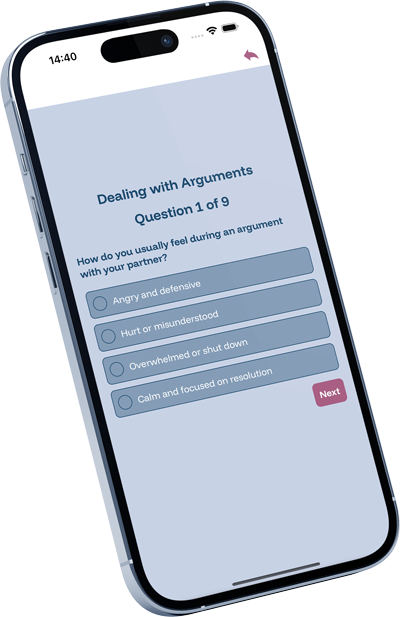
Ready for deeper conversations?
The DeepTalk feature in Whyzper guides you through meaningful questions to help strengthen your emotional connection.
Download Whyzper for freeTalk about the pressure itself
Instead, think in smaller units of reconnection:
These moments are not a consolation prize. They are often the bridge back.
- “I miss feeling close, but I also notice this has started to feel loaded for us.”
- “I don’t want us to force anything. I want us to find our way back to ease.”
- “Can we talk about what makes intimacy feel inviting versus stressful lately?”
Many couples keep discussing the surface issue while avoiding the real one. If intimacy has started to feel heavy, it can help to say that directly and gently.
Protect non-transactional affection
For example:
This kind of conversation often works better than debating who wants more or less.
What helps couples reconnect in real life
One of the fastest ways to make intimacy feel tense is when every affectionate moment carries a hidden question mark. If one partner worries that cuddling, kissing, or tenderness will automatically create pressure, they may begin to avoid even the softer forms of contact they actually miss.
1. Lower the sense of evaluation
Rebuilding trust around affection matters. Warmth grows when touch can be just touch.
2. Repair emotional friction earlier
There is no universal formula, but these principles tend to help across many relationship styles and long-term dynamics:
3. Share the mental and emotional load more fairly
Less monitoring, less scorekeeping, less interpreting every moment as proof of success or failure.
4. Create transitions into closeness
Small resentments become intimacy blockers when they sit too long. Gentle repair matters more than perfect communication.
5. Let desire be responsive, not only spontaneous
Practical support can be surprisingly intimate. Feeling less alone in daily life often creates more room for desire.
Myth vs. reality: why many couples get stuck
Myth: If intimacy takes effort, something is wrong
Do not expect instant connection after overstimulation. Slow down first. A walk, a shower, music, or ten device-free minutes can change the tone.
Myth: More initiation solves intimacy problems
Many people assume desire should appear out of nowhere. In real long-term relationships, it often emerges after warmth, safety, and emotional presence are already there. That is normal.
Myth: Desire should be effortless if the relationship is healthy
Reality: Long-term intimacy often needs intention. The key is that intention should create space, not pressure.
Myth: Talking about intimacy ruins it
Reality: If the real issue is stress, resentment, or pressure, more pursuit can intensify the problem.
Where Whyzper can fit in naturally
Reality: Desire is sensitive to context. Loving each other and easily accessing wanting are not always the same thing.
Reality: The right conversation can reduce awkwardness, lower fear of rejection, and make closeness feel safer again.
When to zoom out instead of pushing through
For many couples, the hardest part is not caring. It is finding a way to express needs, curiosity, or hesitation without making things heavy. That is where a discreet, emotionally intelligent relationship companion like Whyzper can feel helpful.
- Are we mostly interacting as co-managers of life?
- Has affection become too goal-oriented?
- Are there old hurts we keep stepping around?
- Does one of us feel consistently pursued, while the other feels consistently rejected?
- Have we confused closeness with obligation?
Rather than replacing real connection, it can support softer communication around desire, emotional intimacy, and relationship topics that often feel hard to bring up directly. For couples who want more closeness but feel allergic to pressure, subtle and respectful prompts can create movement without turning intimacy into a performance.
FAQ: When intimacy feels forced
Is it normal for sex to feel like a chore in a long-term relationship?
If intimacy has felt strained for a while, it may help to ask broader questions:
How do you bring back intimacy without forcing it?
These questions are not about blame. They are about identifying the relationship patterns underneath the symptom.
Can emotional intimacy affect sexual desire?
It is common, especially during stressful or overloaded phases. It does not automatically mean the relationship is failing. Often, it points to pressure, exhaustion, emotional distance, or a need to reset how closeness happens.
What if one partner wants closeness and the other feels pressure?
Start by reducing pressure, rebuilding non-transactional affection, addressing unresolved tension, and creating more emotional safety. Warmth usually returns more reliably than it can be demanded.
The takeaway
Yes. Feeling understood, respected, and emotionally at ease often shapes how available people feel for sexual intimacy. Emotional disconnection can make desire harder to access.
This is a very common dynamic. The goal is not to decide who is right, but to understand the pattern. One person may be reaching for reassurance while the other is protecting themselves from feeling managed or overwhelmed. Naming that dynamic gently can help both people feel less alone.
If intimacy has started to feel like a task, try not to treat that as a verdict on your relationship. More often, it is a signal. Something about the current pace, pressure, emotional climate, or unspoken expectation is making closeness feel harder than it needs to.
The way back is rarely through more force, better performance, or one perfect conversation. It is usually through less pressure, more honesty, softer contact, and a relationship atmosphere where wanting has room to return.